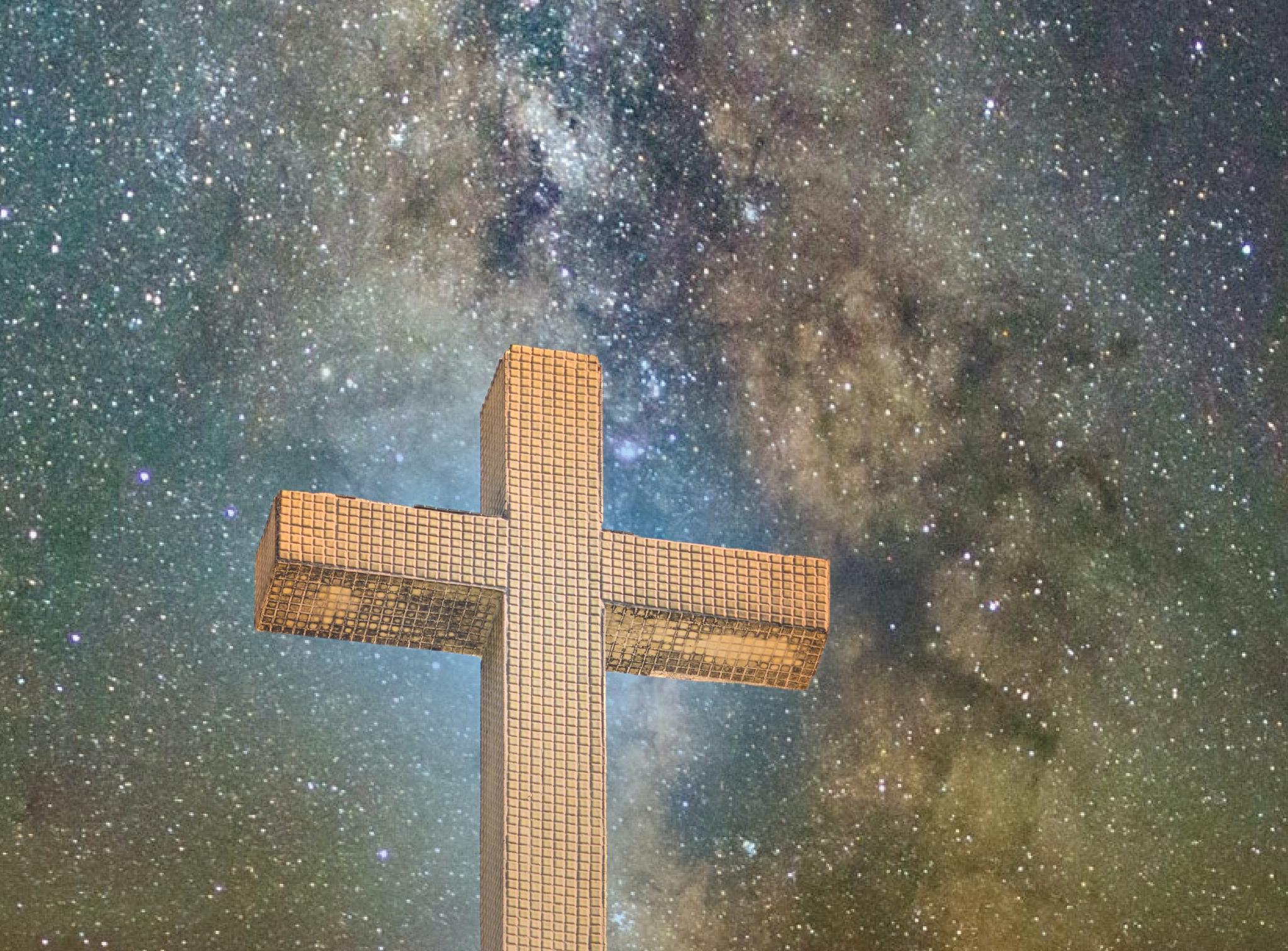
Many of us if not all of us have heard about the Big Bang theory. People think of the Big Bang as a big cosmic explosion but this isn’t accurate. According to scientists who constructed this theory for how the cosmos came to be; it wasn't an explosion as many of us may think, it was more like an expansion. The universe begun as a single point and then expanded and stretched to be as big as it is now. This was the beginning of space and time.
Any time there is a new scientific theory we tend to mix it with religion or at the very least we speculate about the possibility of God’s divine intervention. This is understandable and maybe even be natural for people with religious beliefs. The origins of our cosmos is a great example of this; conversations around this topic usually create tension and have unfavorable outcomes on both sides, religious and scientific. But, when there is a clear understanding of what is science and religion these situations can be avoided.
With the huge amounts of data we have, is possible to associate the creation of the cosmos to the theory and make sense of it. For example, being able to measure the speed of light makes it possible to provide evidence about the expansion of the cosmos. I still remember my college professor explaining how this concept changed the way we think about the origins of our world - it was a moment that sparked my own curiosity about the intersection of faith and science. As I delved deeper into my studies, I found myself pondering the mysteries of creation during late-night walks on campus, surrounded by the silence of the stars above. On one of those nights, I recall stopping at the campus observatory, where students were gathered to gaze at the celestial map, and it struck me - the vast expanse of space, with its intricate dance of planets and stars, was a testament to the complexity and beauty of creation.
Einstein believed that we had an unchanging cosmos until Lemaitre, a catholic priest and scientist, solved Einstein’s equation of the universe starting at a single point and then expanding. Then came more advanced technology, more powerful telescopes and with that, more galaxies were discovered and more data was gathered that was used to support this theory of creation. Lemaitre became Pope Pius XII scientific advisor. The pope saw that the theory coincided with the first chapter of the Book of Genesis and considered declaring it true. However, Lemaitre did not agree because theories are never truly final, they can change at any time and either proven true or not true. It was because of Lemaitre that till this day, the concept of the cosmos' origins and science in general continue to be independent from religion.
Einstein believed that science and religion complemented each other. He believed that religion was necessary for science. On an interview Einstein said “science without religion is lame, religion without science is blind”.
So, can the existence of God as the creator of all things be proven by science? No, because science is the study of all natural forms in nature, it is not the ultimate test for truth. Science cannot prove nor disprove that there’s anything other than nature like God’s existence.
With that said, we can theorize on the creation of the world without mentioning God, though; this doesn’t deny his existence just like we can read a book about cars without mentioning Henry Ford.
Science can tell us how things work or how they came about but cannot go beyond that. It is limited to studying the physical world but can’t explain the “why”. Science cannot deny God’s or any other spiritual existence.
As Christians we understand that God was the architect of life and the cosmos, however, the ways and means he used may just be what we know as evolution. After all, there is no reason why he couldn’t have used a natural evolution process when creating the stars and all living things. This perspective allows us to appreciate the intricate dance between faith and the scientific method, each informing and enriching our understanding of creation in its own unique way.
God is here to guide us, love us and give us the gift of eternal life, not to tell us how the world works or how it was made. His presence in our lives is a constant reminder of the beauty and complexity of creation.