The stench was likely unbearable. In the first century, without embalming or refrigeration, a body left in a rock-cut tomb for four days didn’t just rest; it decomposed. By the time Jesus arrived at Bethany, Lazarus wasn’t sleeping. He was changing. The air in that tomb would have been thick with the reality of mortality, a stark, physical reminder that death is not a metaphor. It is a process. And yet, standing on the dusty road outside the city, Jesus did not rush. He stopped. He asked Mary and Martha a question that seems almost cruel in its simplicity: "Where have you laid him?"
It feels like a trick. They had just told him. They were grieving, frantic, hoping he’d hurry. But Jesus needed them to say it again. He needed them to pinpoint the location of their loss. This pause, this deliberate slowness, is where the theology hides. We often read this story looking for the miracle—the shout, the cloth unraveling, the man walking out into the sun. But the miracle started four days earlier. Or rather, the preparation for the miracle started when Jesus heard the news and stayed where he was for two more days.
The Geometry of Grief
Why wait? That is the first question any skeptic asks, and honestly, it’s the first question a believer asks too. If God is going to raise Lazarus, why let him rot? Why let Mary and Martha sit in the parlor, watching the hours tick by, wondering if their brother is already stiffening in the dark?
— "However, Jesus loved Martha and her sister and Lazarus. So when he heard that Lazarus was ill, he stayed two days longer in the place where he was."
This delay is not inefficiency. It is pedagogy. It is the difference between a parent handing a child a spoon because they’re hungry, and a parent teaching the child how to hold the spoon so they can feed themselves tomorrow. The rotting of Lazarus served a purpose. It stripped away the illusion that life was safe. It forced the sisters—and the onlookers—to confront the fact that even a beloved friend of God could die. It made the subsequent resurrection undeniable. If Jesus had raised Lazarus immediately, critics might have said, "He just wasn't dead yet." But four days? That’s past the point of no return. That’s the domain of worms and dust.
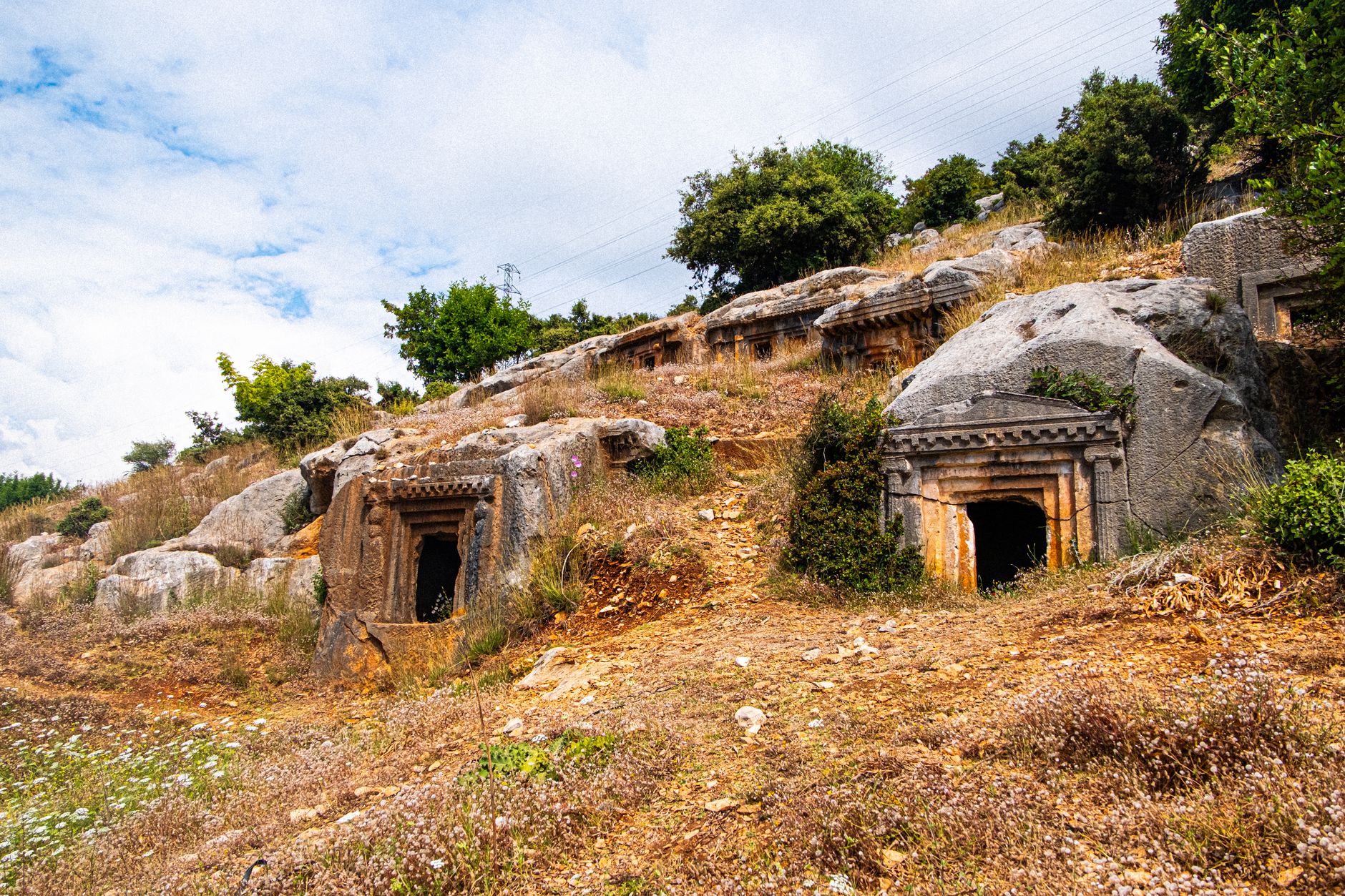
And so, the scene shifts from the road to the entrance of the tomb. It’s a small, rocky hillside. The tomb is a hole cut into the limestone, covered by a large stone. To enter, you have to roll the stone away. Imagine the effort. Imagine the fear. Mary and Martha approach. They know what’s coming. They’ve seen Jesus weep. They’ve heard him pray to the Father. Now, they have to move the stone.
— "Jesus said, 'Take the stone away.' The sister of the man who died, Martha, said to him, 'Lord, since four days have passed, he is now stinking.'"
Martha’s comment is brutally practical. She’s not being rude. She’s acknowledging the truth. The smell is the evidence of time. Time has passed. Time has done its work. And yet, Jesus tells them to move the stone anyway. He wants to show them that the stone is not the barrier. Their belief is the barrier. They need to see the body. They need to see the decay. They need to see the death with their own eyes before they can believe in the life that will follow.
This is a key part of the "Before & After" structure. Before Jesus arrives, Lazarus is alive, but his health is failing. He is dependent on his sisters. He is part of a close-knit family unit that loves each other really. After Jesus arrives, Lazarus is dead. He is in a state of total dependency. He cannot move. He cannot breathe. He cannot think. He is entirely in the hands of another. And that "other" is Jesus.
The Unfolding of the Cloths
When Jesus shouts, "Lazarus, come forth!" the man comes out. But he doesn’t walk freely. He is bound.
— "The dead man came out, his hands and feet wrapped with strips of linen, and a cloth around his face."
These strips of linen are burial cloths. In Jewish custom, the body was wrapped tightly, like a mummy, to preserve it. The fact that Lazarus is still wrapped means he hasn’t been unwrapped yet. He’s come straight out of the shroud. He’s still dressed for the grave.
This image is powerful. Here is a man who has been dead, buried, and wrapped, and now he is walking out of the tomb still wearing his funeral clothes. He is literally emerging from death while still clothed in it. It symbolizes that our old selves, our old identities, are still tied to us. Even when we are "raised up" to new life, we carry the remnants of who we were. We are Lazarus, walking out of the tomb, still wrapped in the linens of our past.
This leads to a crucial practice: Unwrapping. Just as Jesus later tells them, "Loose him, and let him go" (), we have to actively unwrap ourselves. We have to take off the cloths of our old identities, our old sins, our old fears. We have to let them fall away. We have to let Jesus loose us. We have to let him set us free.
A Practice for Autumn: The Unwrapping Ritual
Since it is autumn, the season of letting go, this is a perfect time to establish a daily prayer routine centered on this theme.
1. Morning: Acknowledge the Wrappings. Start your day by identifying what is binding you. Are you wrapped in anxiety? In pride? In guilt? Name it specifically. "Lord, I am wrapped in the cloth of my fear of failure today. Please see it."
2. Midday: The Roll-Away. During your workday, when you feel the weight of these bindings pressing down, perform a micro-practice of "rolling away the stone." Take three deep breaths. On the third exhale, visualize yourself physically rolling the heavy stone away from the entrance of your mind. See the opening. See the light coming in.
3. Evening: The Shout and the Release. End your day with the climax of the ritual. Stand up if you can. Look at a cross or a picture of Jesus. Shout it out (even if it’s a whisper-shout): "JESUS, COME FORTH!" Then, visualize Lazarus stepping out, still wrapped. Now, visualize Jesus taking a cloth and wiping the dirt from your face. Finally, visualize Jesus saying, "Loose him." As you say "Amen," imagine someone physically untieing the knots on your arms and legs. Feel the linen sliding off your skin. Feel the cool air hit your bare arms. You are free.
A Confession from the Waiting Room
I’ll be honest, I’ve struggled with this concept of the "wait" for a long time. I used to read this story and feel irritated with Jesus. Why didn’t He just go? I’m the same way. When I pray, I want immediate answers. I want the phone to ring. I want the check to clear. I want the diagnosis to be benign. I hate the waiting room. I hate the four-day silence.
But recently, I’ve started to see it differently. I’ve started to see the wait not as God’s indifference, but as His preparation. I’ve started to see the "rotting" not as God’s neglect, but as God’s honesty. He’s letting me see the truth of my condition before He offers the cure. He’s letting me see how bad it is so that when He fixes it, I know it wasn’t my doing. I know it was Him.
This shift in perspective has changed my daily prayer life. I no longer pray as if I’m demanding service from a clerk. I pray as if I’m sitting in the presence of a Master Surgeon who is preparing the instruments. I trust Him with the scalpel. I trust Him with the wait.
The Surprise of the Smell
One detail that often gets missed in our readings is the sensory reality of the tomb. We tend to spiritualize the scene. We think of the "spiritual death" of Lazarus. But John gives us the physical details. The stone. The smell. The linen.
Why does John include the detail about the smell? "Since four days have passed, he is now stinking." (). This is a jarring detail for our sanitized, modern sensibilities. We like to keep our theology clean. We like to keep our miracles sterile. But John throws the smell in our faces. He forces us to acknowledge the physical reality of death.
This has a serious implication for our understanding of grace. Grace is not a spiritual abstraction that bypasses the physical world. Grace enters the world in the flesh. It becomes incarnate. It gets dirty. It smells. It rots. And then, it rises.
This challenges our tendency to separate the "spiritual" from the "physical." We often treat our bodies as temporary vessels, inferior to our souls. But this story shows us that the physical reality of our existence is not an obstacle to God’s power; it is the stage upon which He acts. He uses the stone, the linen, and the smell to make His point. He uses the tangible world to reveal the invisible truth.
This is a reminder that our faith is not meant to escape the world, but to engage with it. We are called to live in the tension between the decay and the resurrection. We are called to live in the space where the smell is present, but the hope is stronger. We are called to trust that the One who is working in our lives is not ignoring the mess, but working through it.
The Contrast of Silence and Sound
Another striking aspect of this narrative is the contrast between silence and sound. For most of the story, there is a heavy silence. The silence of the tomb. The silence of Jesus during the two-day wait. The silence of the sisters as they grieve.
But then, there is the explosion of sound. Jesus weeps. Jesus prays aloud. Jesus shouts. Lazarus emerges.
This contrast mirrors the Christian experience of faith. Often, we spend long periods in silence, waiting for God to speak. We sit in the darkness, wondering if He is even there. We feel the silence of God. We feel the absence of His voice.
But then, there is the moment when He speaks. There is the moment when the silence is broken. There is the shout of the name. There is the answer to the prayer. There is the sound of life returning.
This teaches us to be comfortable with the silence. It teaches us that the silence is not empty. It is full of preparation. It is full of the gathering of strength. It is full of the building of the foundation. And it teaches us to listen for the shout. It teaches us to recognize the sound of life when it comes. It teaches us to respond to the voice when it calls.
The Role of the Community
Finally, we must not overlook the role of the community in this story. Lazarus was not alone in his death. He had sisters. He had friends. He had a community that cared for him.
When Jesus arrived, he was met by a crowd. They were not just Mary and Martha. They were the neighbors. They were the friends. They were the people who had known Lazarus. They were the people who had loved him. And they were the people who were ready to witness the miracle.
This reminds us that we are not alone in our journey of faith. We have a community of believers who walks with us. We have friends who pray for us. We have family who supports us. We have a church that nourishes us. And we have a God who holds us.
When we are in the tomb of our grief, we are not alone. We have the sisters who bring the food. We have the friends who bring the flowers. We have the community that brings the hope. And we have the Jesus who brings the life.
So, as we face the autumn of our own lives, let us remember the story of Lazarus. Let us remember the four-day wait. Let us remember the smell of the tomb. Let us remember the shout of the name. And let us remember the release from the cloths.
So let's trust in the timing of God. Let us trust in the preparation of God. Let us trust in the power of God. And let us trust in the love of God.
For He is the One who waits. He is the One who prepares. He is the One who shouts. And He is the One who releases.
A Prayer for the Waiting
Lord, I am sitting in the waiting room. I have been here for four days. I can smell the decay of my old self. I can feel the linen tight around my wrists. I am afraid that You have forgotten me. I am afraid that You are late. But I remember that You are not indifferent. I remember that You are preparing. I remember that You are gathering the strength to shout my name. So, I will stay. I will wait. I will trust that the silence is not empty. I will trust that the shout is coming. And when it comes, I will rise. Amen.