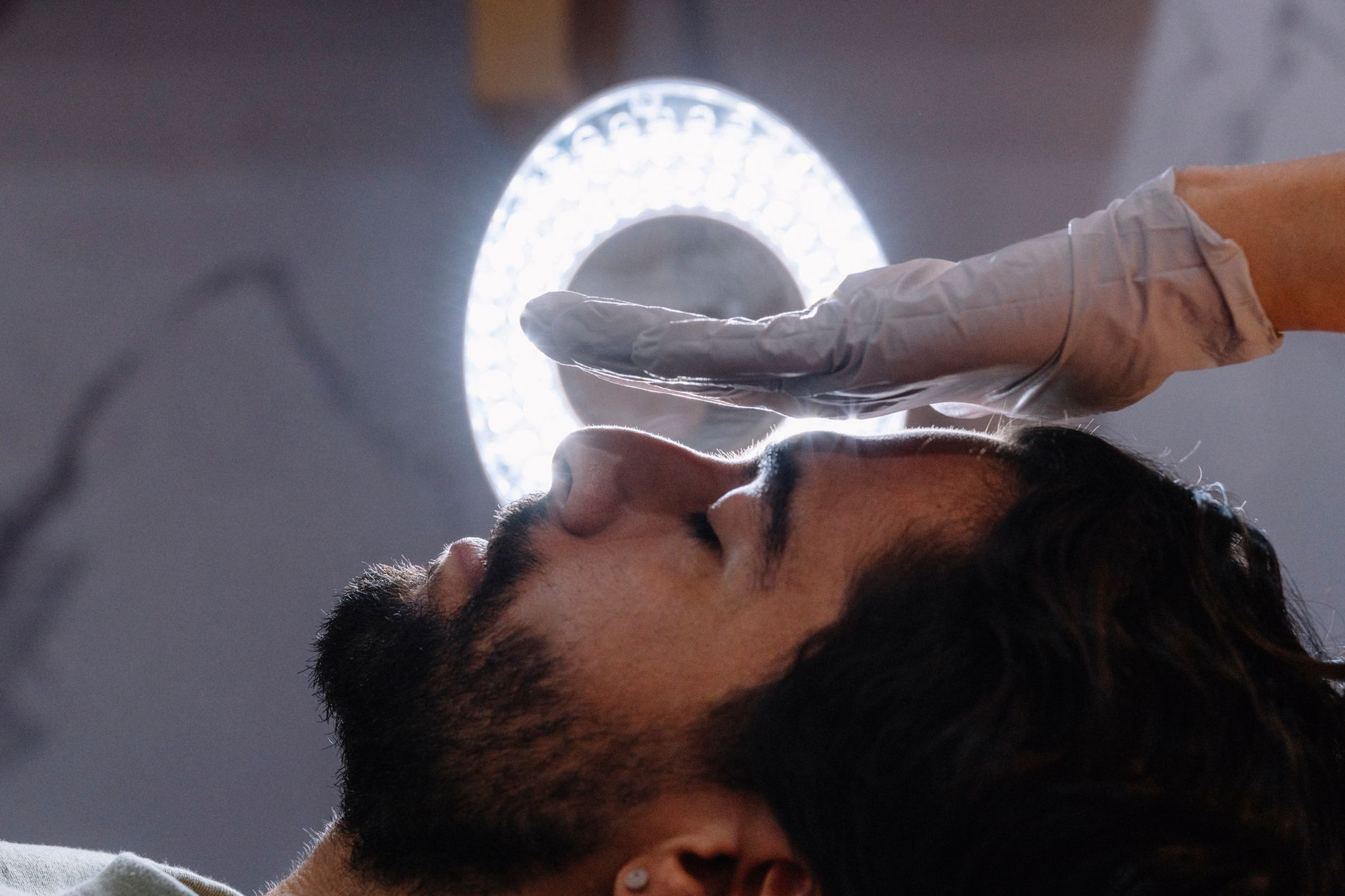
Who Gave Him Sight? A Look at the Blind Man in Bethsaida
— “Jesus took them by the hand, and with a touch healed them.”
That’s it. No lecture. No theological debate about whether he deserved the healing or if his family had been faithful enough to God. Just contact. And sight.
It’s late autumn here where I am. The leaves are brown and brittle, crunching underfoot in a way that makes you acutely aware of how much the year has slipped through our fingers. We’re in that weird, quiet stretch between Thanksgiving and Christmas where the air feels thin. It’s a time when I find myself looking back, trying to make sense of the past twelve months. Some days feel like they barely happened; others are still echoing in my mind at 2 a.m.
In the middle of that reflective haze, I keep returning to this story in Mark 8. Not John’s one at the pool of Bethesda—this is different. This is Jesus taking a man who can’t see and leading him to the outside of town.
The Walk to the Edge of Town
Here’s the thing about this story that trips me up every time I read it. Jesus doesn’t just glance at the blind man and say, “Hey, see?” No. He takes him by the hand.
Think about that geometry for a second. The blind man is in Bethsaida, near the Sea of Galilee. Jesus leads him out of the town.
Why?
It’s not because the crowd was getting too loud, though that might be part of it. It feels more like a deliberate move to create space for something intimate. Jesus is pulling this man away from the public square, away from the onlookers who probably guessed his condition but never truly saw him. He’s taking him to the threshold. To the edge of what he knows.
I’ve sat in church services where I felt like an object on display rather than a person being met. We often perform our faith in the town square—our tithes, our testimony, our polite smiles. But healing? Real, bone-deep sight? That usually happens in the quiet places where we’re allowed to be a bit awkward, a bit messy, and wholly dependent on someone else’s hand.
This isn’t just about physical blindness. It’s a metaphor so potent it hurts. We all have areas of life where we’re walking into walls and calling them "mistakes" or "bad luck." We have spiritual blind spots. We don’t see the truth of who we are, or how God is moving in our lives, because we’re stuck staring at the ground in front of us.
Spittle and Fingertips: The Gross Part of Grace
Mark tells us Jesus made mud from his saliva and put it on the man’s eyes. And then he told him to wash in the Pool of Siloam, which means "Sent."
I’ll be honest. This verse has always made me flinch a little. It’s gritty. It’s unglamorous. In our modern, sanitized version of faith, we expect a light to come down from a cloud, or a song to swell on the soundtrack. But Jesus used his own spit. He got his hands dirty.
There’s something seriously human about that. It reminds me of times I’ve tried to fix my own spiritual mess with logic and willpower, only to realize I needed something messy—something that required trust rather than comprehension.
When Jesus says, "Go wash in the Pool of Siloam," he’s giving a command that makes no logical sense to a man who can’t see. How do you go to a pool if you can’t find it? How do you wash your eyes in water that doesn't automatically clear your vision?
You go because someone who does know the way is holding your hand. And you wash because He told you to.
It’s a lesson in trust that bypasses the brain and goes straight for the heart. We often want to understand why God is doing something before we step into it. But sometimes, the "pool" is just a place where you have to obey before you can perceive. You wash. And then, when you look up?
You see.
The Crowd’s Confession: "He Sees"
The man comes back, and the crowd is there. But this time, they don’t just pity him or point at him. They ask, "Who is this?"
And the man, with new eyes and a newfound voice, answers: "A man like me."
Wait. Hold on.
He says, "I am a man like him" (in some translations, though usually has Peter confessing this later about Jesus). Let’s stick to the immediate reaction in .
Actually, let's look at the broader narrative arc here because it’s easy to get lost in the details. The blind man is a character who moves from being an object of charity to a subject with agency. Before the healing, he’s a beggar. After? He follows Jesus on the road ().
This is the shift. The transformation isn’t just that he can see; it’s that he chooses to follow.
I think about this in our current season of the year, as we finish up 2024. Are we just waiting for God to fix our sight? Or, once He does that messy, spit-and-water work in our lives, are we willing to get up and follow?
Sight without movement is just a better view of the same dead end. The blind man didn’t sit on his porch and appreciate the sunset. He got up. He walked toward Jesus.
Practical Steps for This Week
So, how do we take this from a story in the second century to our Tuesday morning?
First, identify your "outside of town" moment. This week, pick one area of life where you’re frustrated because you can’t see the way forward. Stop trying to solve it with logic. Create space for stillness. Go "outside" the noise of your phone, your emails, your social comparisons. Sit with God in that quiet place and just let Him take your hand. Let it be awkward.
Second, expect the process to feel messy. If you’re seeking clarity or healing, don’t be surprised if it starts with something that feels unpolished. Maybe it’s a prayer that comes out as a groan rather than poetry. Maybe it’s a conversation with a friend who challenges you in a way that feels uncomfortable. Embrace the grit. The mud is part of the medicine.
Third, obey before you understand. There will be moments where God tells you to "wash in Siloam," and you’re standing there with mud on your face, thinking, Are you sure? I can’t even find the pool. Go anyway. Wash anyway. The seeing comes after the washing, not before.
And finally, look at who you are in light of this new sight. The blind man became a follower. He became a witness. What is your version of "following"? Is it serving in the kitchen? Is it having that difficult conversation with a family member? Is it praying for someone you find annoying?
The year is winding down. The leaves are falling. It’s a perfect time to ask: What am I not seeing?
Not just in the world around you, but in your own heart. And when you find that blind spot, don’t try to patch it yourself with willpower. Let Jesus take your hand. Let Him lead you out of the town square and into the quiet. Let Him get a little messy.
Because the other side of that mud is sight. And on the other side of sight?
There’s a road to follow.
Lord, I’m tired of squinting at life. I don’t always understand why You lead me to these quiet, awkward places, but I trust Your hand more than my own logic. Clean what needs cleaning. Open what’s shut tight in me. I’m ready to see, and I’m ready to walk. In Your name. Amen.