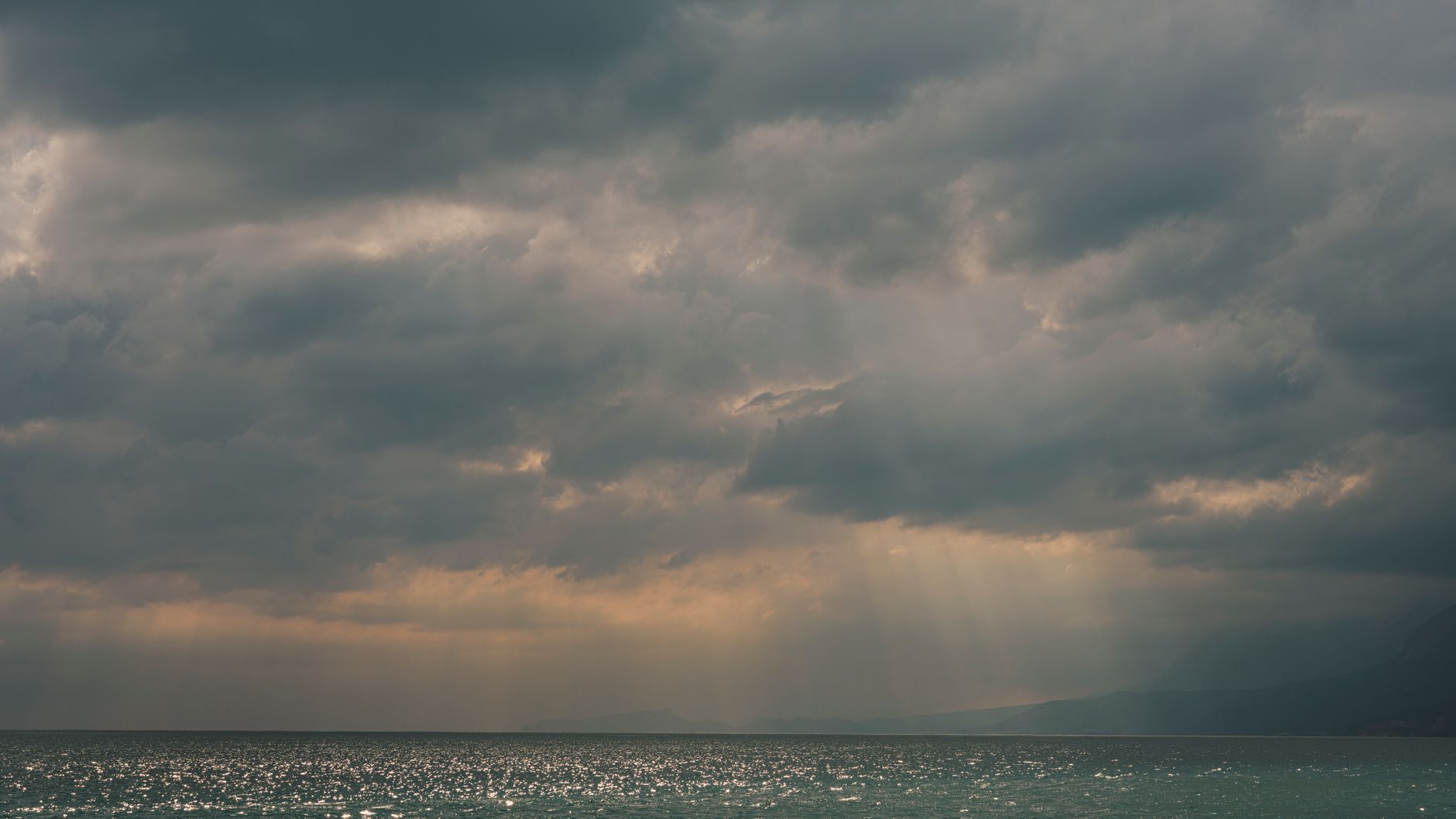
We usually picture the disciples asleep because they were tired. They’d been up all night fishing. Their nets were empty. The boat was rocking gently on a lake that looked, from the shore, like a calm sheet of glass. It makes sense to rest.
But here’s the thing that always catches me off guard: when the wind really rose, when the waves crashed over the gunwales and water began to pool on the deck, they didn’t wake up because the boat was leaking. They woke up because they were afraid.
And then, in their panic, they shouted at the most powerful being in history to look like a man who didn’t care.
“Teacher, do you not care if we perish?” ()
That question is the heart of this story. It isn’t about the wind. It isn’t about the waves. It’s about proximity. They were in the boat with Jesus. He was literally there, asleep on a cushion at the stern. And yet, in the chaos of their own fear, they couldn’t recognize Him as the authority over the elements.
We do this every single day. We are in the boat with Him, but when the storm hits—when the diagnosis comes, when the marriage cracks, when the job evaporates—we scream into the darkness. We act like He’s absent because our senses are overwhelmed by the noise of the crisis.
The Anatomy of Panic
Let’s look at what actually happened in that boat, because it mirrors our internal state so perfectly you’d think Mark sat in on a therapy session.
First, there was the storm itself. The Greek word used for the wind is metheos, which suggests a violent, opposing gale. It wasn’t just bad weather; it was an assault. For fishermen, this is death. The ocean doesn’t negotiate.
Then there was the reaction. They were “greatly afraid” (). Fear is a liar. It tells you that the situation is bigger than your Savior. It convinces you that if Jesus had cared, He would have been awake. If the boat is filling with water, God must be indifferent.
I’ll be honest. I’ve sat in my own “boats” and felt that exact sting of indifference. There’s a specific kind of loneliness that comes from suffering while knowing God is good. It feels like betrayal. You pray, and the ceiling doesn’t open up. The storm keeps raging. And you start to wonder if He’s just... drifting?
But Jesus wasn’t drifting. He was sleeping. And that distinction changes everything.
The Authority in the Cushion
When Jesus rose, He didn’t first go to the disciples. He went to the wind and the sea.
He rebuked the wind and said to the lake, “Quiet! Be still!” ()
The word for “quiet” is phimao. It’s a strong, abrupt command. It’s the word you use when someone is shouting in your face and you need them to shut up. It’s the word a parent uses when a toddler is screaming in a grocery store aisle. And it works instantly.
The wind ceased. There was a great calm.
Notice the order. Jesus calmed the external storm before He addressed the internal one. This is crucial. We often want God to fix our feelings first so we can handle the circumstances. But Jesus fixed the circumstance first. He established His authority over the physical reality of their fear.
This is where the "Prophetic Encourager" voice needs to kick in. This isn’t just a feel-good story about nice weather. It is a declaration of sovereignty. The God who slept in the boat is the same God who holds the atmosphere in His fist. If He can command the wind, He can command your anxiety. If He can still the lake, He can still the chaos in your mind.
You are not fighting a storm that has no ceiling. You are in the presence of the One who defines reality.
The Real Storm Was Inside
After the wind died down, Jesus turned to His disciples and asked a question that stings.
“Where is your faith?” ()
It wasn’t a gentle inquiry. It was a challenge. He was pointing out the absurdity of their fear. They had just seen Him rebuke nature. They had just experienced total, supernatural peace. And yet, they were still trembling.
Their fear wasn’t based on the water anymore; it was based on a lack of trust in His character.
This is the trap we fall into. We think faith is about having a life without storms. If God loves us, the lake should be glass. The sun should shine. The nets should always be full. But Jesus didn’t promise a smooth lake. He promised to ride in the boat with us.
The difference between the disciples before and after this event is stark. Before, they were professional fishermen who knew the lake better than anyone, and they still panicked. After, they marveled at Him. They asked each other, “Who then is this, that even wind and sea obey him?” ().
That’s the transformation. It wasn’t that life became easier. It was that their view of Jesus became larger than the storm.
I used to read this verse and feel a bit guilty, like Jesus was scolding me for being weak. Now I see it as an invitation to be honest. He isn’t angry that you’re afraid. He’s asking if your faith is big enough to cover the fear.
Preparing for the Shortening Days
It’s late summer now. The days are getting shorter. The light is changing, becoming softer, more golden as the sun dips lower earlier in the evening. There’s a natural instinct to pull back, to prepare for what’s coming. We stock the pantry. We check the furnace filters. We get ready for the cold.
Spiritually, we need to do the same.
We often wait for a storm to hit before we check our anchor. We think, “I’ll pray more when things get bad.” But by then, we’re already soaked. We’re already shouting “Do you not care?”
Preparation isn’t about perfection. It’s about position. Jesus was prepared because He knew who He was. He knew the wind would come, so He rested in His authority, not in the calm of the water.
Your position is this: You are loved by a God who finds your chaos interesting, not annoying. He doesn’t look at your messy life and sigh. He looks at it and says, “I can handle this.”
So, how do we live in that truth? We don’t wait for the wind to die down to trust Him. We trust Him in the wind.
One Concrete Step for This Week
Here is your assignment. Don’t overthink it.
Pick one specific area of your life where you are currently experiencing “wind.” It might be a relationship that feels strained. A health worry. A financial uncertainty. Write it down on a piece of paper. Just the name of the storm.
Then, for the next three days, every time that thought pops into your head—every time you feel that jolt of fear or frustration—you are going to do two things.
First, stop the panic. Take one deep breath. That’s your “Quiet! Be still!”
Second, recite this specific truth out loud: “Jesus is in the boat. He is awake. And He is bigger than this wind.”
You don’t have to wait for the storm to end to speak that truth. In fact, you must say it while the waves are crashing. That’s where faith is forged. Not in the calm, but in the chaos of trusting the One who sleeps safely on the cushion while you fight for your life.
The lake will calm. The wind will stop. And when it does, you’ll finally realize He was there the whole time.
But right now? In the middle of the spray and the noise? Choose Him.