Daniel’s Lion’s Den: Trusting God When Silence Feels Deadly
The silence of God is not the absence of His presence; it is the space where your trust is tested.
You’ve probably sat in your car after work, engine still running, just staring at the garage door, wondering if this was all there was. Maybe you’re there now. The weeks after Easter are supposed to be a time of high energy, a celebration of victory. We sing louder. We feel lighter. We assume that because Jesus rose, our problems should have vanished too. But life doesn’t work like a switch you flip. Life works like a digestion process. It takes time. And sometimes, even when the tomb is empty, you still find yourself staring into the jaws of a lion.
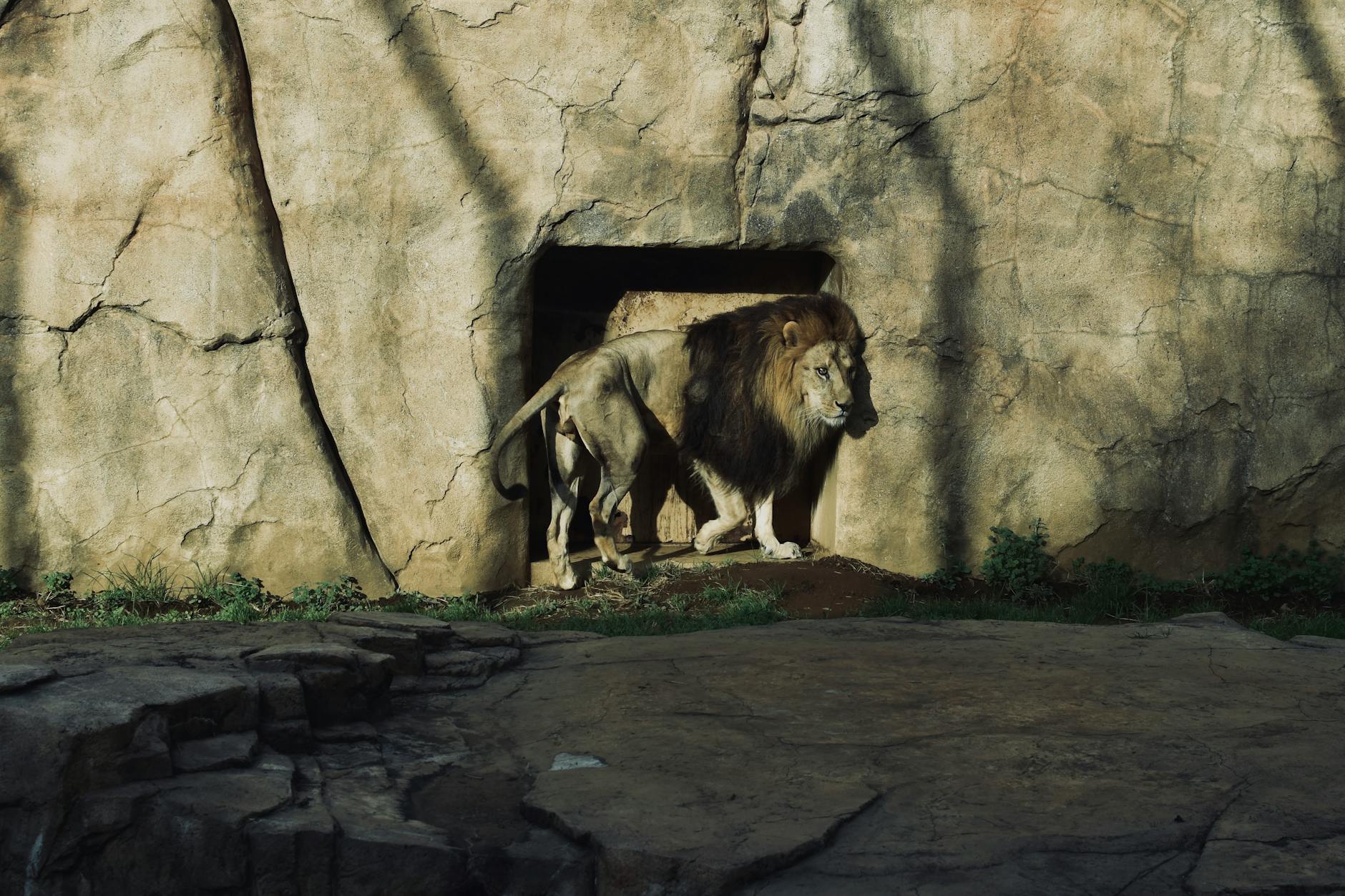
Daniel didn’t get the lion’s den as a reward for good behavior. It wasn’t a punishment. It was a death sentence wrapped in gold-plated bureaucracy. But here’s the thing about Daniel that most of us miss when we read this story quickly: he didn’t pray to get out of the den. He prayed because he was faithful, even when he knew the lions might eat him.
That distinction changes everything.
The Geometry of Faithfulness
Let’s look at the text. says the king put Daniel in the den, saying, "May your God, whom you serve continually, rescue you!" Notice the king’s tone. It’s hopeful, but it’s not confident. Darius wasn’t sure if Daniel’s God could actually handle the biological reality of hungry lions.
But Daniel? Daniel didn’t spend those six hours pacing or checking his pulse. He spent them in the same posture he had in the palace for decades. He knelt. He prayed. He gave thanks.
Why? Because the ritual of prayer wasn’t just a way to ask for help. It was how he stayed connected to the Source of his life.
Think about your own "dens." Maybe it’s a diagnosis. Maybe it’s a marriage that’s running on fumes. Maybe it’s the quiet, creeping anxiety that you’re not enough. We tend to treat prayer like a customer service hotline. We dial in, we state our problem, we wait for a solution. If the solution doesn’t come in ten minutes, we hang up. We assume God is either busy or deaf.
But Daniel’s prayer was different. It was structural. It was the load-bearing wall of his soul. When the pressure came, he didn’t try to build a new wall. He just leaned on the old one.
I’ll be honest, I’ve struggled with this too. I used to read Daniel and think, "Wow, what a hero." Then I’d look at my own life—my messy emails, my impatience with my kids, my occasional doubts—and think, "Yeah, right. I’m not that disciplined." We think faithfulness is this grand, heroic act of willpower. It’s not. It’s just showing up. It’s opening the window when the wind is blowing. It’s saying "thank you" when you don’t feel like it.
The geometry of faithfulness is simple: God is the center. You are the perimeter. As long as you stay connected to the center, the distance between you and safety doesn’t matter as much as you think.
The God Who Closes the Mouths
And this is where the miracle happens. It’s not that the lions became vegetarian. It’s not that they suddenly forgot how to hunt. The text says, "the mouths of the lions were shut" ().
Notice the specificity. Mouths. Not the lions. Just the parts that mattered for the sentence.
This is a crucial theological point for our personal growth. We often pray for the whole situation to change. We pray for the lion to leave the room. We pray for the boss to be nicer. We pray for the bank account to fill up. And sometimes, God gives us that. But often, He just shuts the mouth. He limits the damage. He contains the chaos.
In the context of the weeks after Easter, this is huge. We celebrate that death was defeated. But we don’t always understand how it was defeated. It wasn’t that death disappeared. It was that death was silenced. The grave had a mouth, and Jesus shut it. For you, the "lion" might be fear, or shame, or a specific circumstance that threatens to devour your joy. God doesn’t always remove the lion immediately. Sometimes, He just shuts its mouth long enough for you to see Him.
Look at what happened to Daniel. He survived. But did he stay in the den all day? No. He got out. And when he got out, he didn’t just go back to being Daniel. He became a witness. The king wrote a decree that everyone should fear and reverence the God of Daniel. Why? Because Daniel’s God had delivered him.
But here’s the twist. Daniel’s deliverance wasn’t just for Daniel. It was for the empire. It was for the pagan king who didn’t even know God. Your resilience in the face of your "lion" isn’t just for you. It’s a testimony to the people watching you.
When you don’t panic when the mouth shuts, when you don’t scream in terror, but instead sit quietly in the presence of God, you confuse the world. They expect you to break. They expect you to curse God. But you don’t. You just trust. And that confuses them more than any miracle.
The Silence Between the Roar and the Rescue
Now, let’s talk about the silence. The most terrifying part of the lion’s den isn’t the roar. It’s the quiet before the roar. It’s the waiting.
In the weeks after Easter, we’re reminded that Jesus waited. He waited in the tomb. He waited in the garden. He waited on the cross. There was a moment where it looked like God had lost. The silence was deafening. But that silence wasn’t empty. It was full of purpose.
Daniel’s silence in the den was similar. He didn’t know if he would be eaten. He didn’t know if the king would change his mind. He didn’t know if the lions would be hungry. He just knew God was faithful.
This is where personal growth happens. Not in the rescue. In the waiting.
We live in a world that demands instant results. We want the prayer answered now. We want the healing today. We want the promotion this quarter. But God is often working in the slow, quiet spaces. He is forming character in us that cannot be formed in the spotlight.
Think of it like this: A muscle doesn’t grow when you lift the weight. It grows in the recovery. It grows in the rest. The lion’s den was Daniel’s recovery time. It was the space where his faith was stripped of its rewards and left with its core. Would he still worship God if the lions ate him? That was the question. And the answer was yes.
And that’s the resilience we’re building. Not the ability to avoid the den. But the ability to survive it. To trust that even if the mouth doesn’t shut, God is there. Even if the rescue is delayed, God is faithful.
Living in the "Already" and the "Not Yet"
The weeks after Easter are a time of tension. We know death is defeated. We know the tomb is empty. But we still die. We still get sick. We still face lions.
This is the "already/not yet" of the Kingdom. It’s already done. It’s not yet fully visible.
Daniel lived in that tension. He was in the den, but he was already secure in God. We live in the same tension. We are saints, but we are still struggling. We are forgiven, but we still sin. We are healed, but we still feel pain.
And that’s okay.
Your resilience isn’t about perfection. It’s about presence. It’s about staying present with God in the mess. It’s about saying, "God, I don’t understand why the mouth is open right now, but I know You are in it."
So, how do you live this out this week?
First, identify your lion. What is the one thing that threatens to swallow your peace? Name it. Don’t let it be a vague anxiety. Make it specific. It’s the debt. The illness. The loneliness.
Second, practice the "shut mouth" prayer. Instead of praying for the lion to leave, pray for your mouth to be shut to fear. Pray for your heart to be still. Pray for the ability to worship in the dark.
Third, remember that your silence is a witness. You don’t have to explain yourself to everyone. Just stay faithful. Just stay connected. Let your peace be the loudest thing in the room.
Daniel’s story isn’t just about a man and a bunch of lions. It’s about a God who is faithful in the darkness. It’s about a faith that doesn’t need constant validation to keep going.
And as we move through these weeks after Easter, let’s not just celebrate the empty tomb. Let’s celebrate the empty mouths. Let’s celebrate the God who can shut the jaws of death, and the lions, and the fear, and the shame.
Because the same God who shut the mouths of the lions for Daniel is the God who shut the mouth of death for Jesus. And if He could do it for one, He can do it for you.
The lion might be there. But he’s not in control.
You’re not alone in the den. You never were.