You are not alone in your burdens because the Creator of the universe is watching you, and He has never once been late to a moment of need.
There is a specific kind of loneliness that hits hardest in the quiet hours, isn’t there? It’s not the absence of people. You might be surrounded by family, or colleagues, or a house full of pets and noise. It’s the absence of care. The feeling that you are standing in a crowded room, shouting, but no one is really listening. Or worse, that everyone hears you, but they just shrug and go back to scrolling through their phones.
We’ve all been there. Maybe you were sitting in your car in the driveway last Tuesday, engine still warm, staring at the dashboard clock like it held the secrets of existence. You had just finished a work call that went sideways, or you were folding laundry that never seemed to end, and suddenly it hit you: Who is actually holding this together?
That’s where Psalm 121 finds us. It’s not a long psalm. In fact, it’s short enough to memorize if you really try (and many of us have tried, only to forget the words by Wednesday). But it’s dense. It’s a shield.
"I lift up my eyes to the hills. From where does my help come? My help comes from the Lord, who made heaven and earth." ()
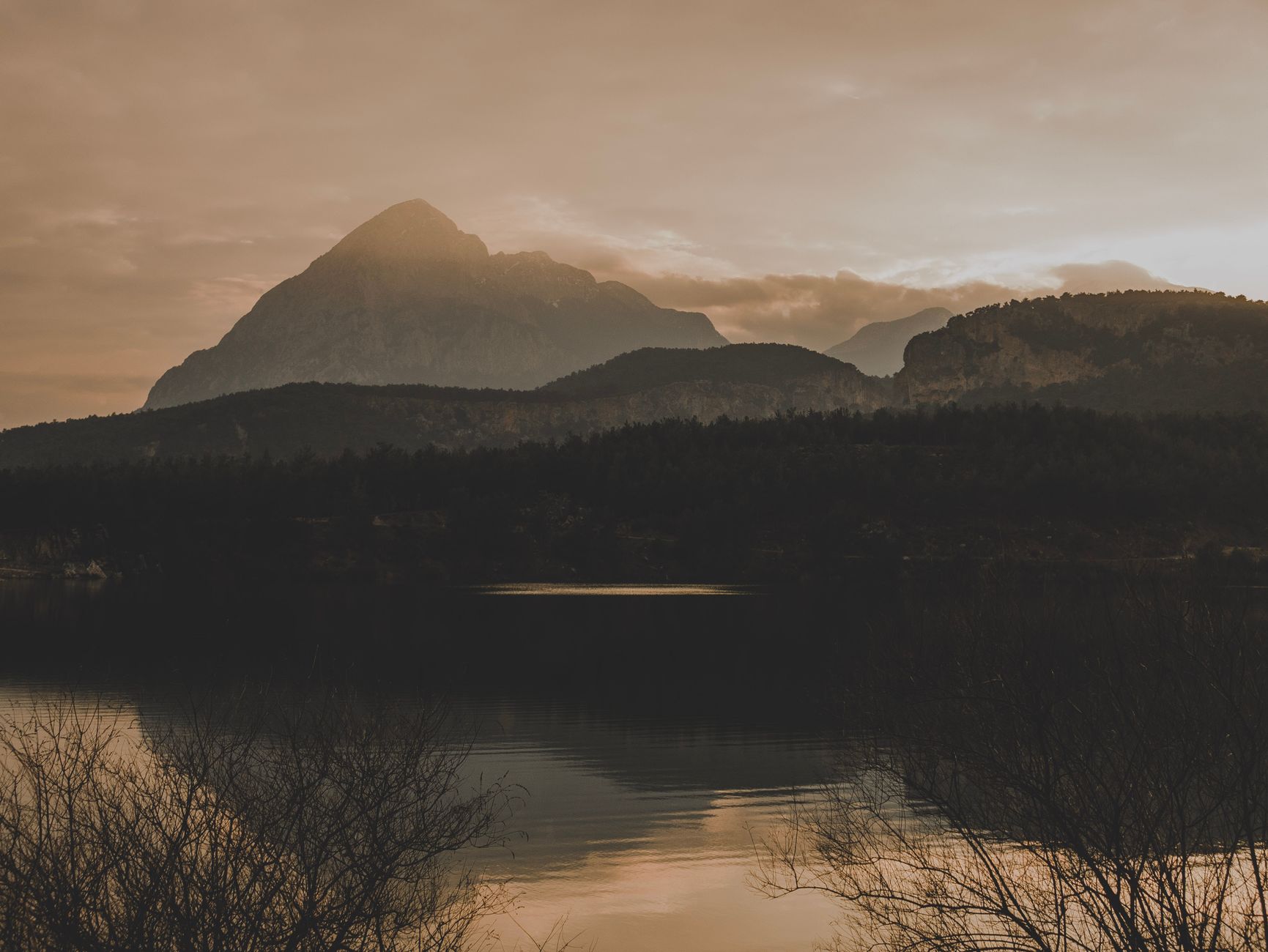
Look at that movement. It’s physical. It’s visual. The writer starts by looking out. And what does he see? Hills.
Now, if you live in a flat place, or a city dominated by skyscrapers, this might feel a bit abstract. But for the ancient Israelite, hills weren’t just pretty scenery. They were places of danger and places of refuge. On the high ground, you could see enemies approaching from miles away. But they were also hard to climb, steep, and exposed to the wind.
So when he says, "I lift up my eyes," he’s admitting something vulnerable. He was looking down first. Maybe at the mud. Maybe at his own feet, which were tired. Maybe at the problems staring him in the face. He was worried about what was close. Then, deliberately, he shifts his gaze upward and outward.
He stops looking at the size of the problem and starts looking at the source of the help.
Here’s the thing about how we often pray: we treat God like a cosmic vending machine. We put in the coin of our faith, or the specific words we think He likes to hear, and we expect a specific product to drop out. I prayed for my job, so why is it still going? I asked for healing, so why does my knee still click when it rains?
We get frustrated because we’re looking at the hills and expecting them to move. But Psalm 121 doesn’t promise that the hills will vanish. It promises that God is watching you while you climb them.
"He will not let your foot be moved; he who keeps you will not slumber." ()
Let’s be honest for a second. I’ve struggled with this verse my whole life. I used to read "He will not let your foot be moved" and think it meant stability. That if I was a good Christian, my life would be smooth. No sudden layoffs. No unexpected diagnoses. No car accidents on rainy Tuesdays.
But then I had a year where my foot was moved more times than I can count. And I remember sitting on the floor of my kitchen, surrounded by boxes, wondering if God had forgotten His own promise.
Then I realized: "Not moved" doesn’t mean "stationary." It means secure.
It’s the difference between being stuck and being held. A mountain doesn’t move, but a climber does. The climber shifts weight from left foot to right. They stumble. They slip on loose gravel. But they don’t fall. They are hooked to the rock.
God is that Rock. And He isn’t just standing there passively, waiting for us to get it right so He can bless us. The text says He is the one who keeps you. That’s an active verb. It’s continuous. Present tense. He is keeping you right now, this very second, while you are reading this sentence.
And here is the part that usually gives me peace when my anxiety spikes: "He who keeps you will not slumber."
Think about that. Slumber. Sleep. Rest.
We live in a culture that glorifies the grind, but also fears rest. We worry that if we stop moving, we’ll fall behind. If we close our eyes for a nap, the world will keep spinning without us. We are terrified of being left in charge of our own lives, because we know how messy it gets when we’re the only ones awake.
But God? He doesn’t have to stay up all night worrying about you.
"Behold, he who keeps Israel will neither slumber nor sleep." ()
It’s almost funny, isn’t it? The Creator of the stars doesn’t need coffee. He doesn’t check his watch. He isn’t scrolling through news feeds, trying to gauge the mood of the nation. He is fully present. Fully aware.
This changes how we view our exhaustion. When you are tired, it doesn’t mean God is asleep on the job. It means He has ordained that you need rest, just as He did. Rest is not a sign of weakness; it’s an act of trust. It’s you saying, "I can close my eyes because I know who is watching."
There’s a cultural moment we’re living in where everyone feels like they are carrying the weight of the world on their shoulders. We see it in the news, we feel it in our bodies. Burnout is no longer just a corporate buzzword; it’s a spiritual condition. We are trying to be our own gods, managing our finances, our health, our relationships, and our futures all at once.
It’s exhausting. Honestly, it’s silly.
Imagine a child trying to carry the sofa by themselves because they don’t want anyone to take over. They strain. Their back hurts. They stumble. Meanwhile, the parent is standing right there, hands open, ready to help if just asked.
That’s our relationship with God. He isn’t waiting for us to collapse before He steps in. He is already there, ready to bear the weight. But we have to lift our eyes from the sofa to the parent’s face.
And there is another layer here that we often miss. Look at verse 5 again. "The Lord is your keeper."
Notice the shift in pronouns. It started with He (God). Then it became your (personal, specific). This isn’t a generic blessing for "humanity" in the abstract. It’s for you. Specifically you. With your specific name, your specific history, your specific fears.
God is not just a force of nature. He is a personal guardian.
I think about the ancient practice of "keeping watch." In biblical times, especially during military campaigns or dangerous journeys, someone had to stay awake while others slept. They would walk the perimeter, checking for threats, ensuring safety.
God is walking your perimeter right now. When you are too tired to pray, He is praying for you. When you are too anxious to work, He is working in you. When you feel like you’re failing, He is keeping you.
So what do we do with this? How does Psalm 121 move from the page to our messy, beautiful, chaotic daily lives?
First, practice looking up. Literally and figuratively. When the stress hits—when your phone buzzes with bad news, when the argument escalates, when the doctor calls—take a physical pause. Lift your eyes. Look at the sky. Remind yourself of who made it. It sounds simple, almost too simple. But simplicity is often where the power lives.
Second, embrace your movement. Don’t be afraid to stumble. Don’t be afraid to ask for help. The promise isn't that you won't move; it's that you won't be moved—displaced from His care. You can change jobs, move cities, lose weight, gain weight, and God’s keeping hand remains steady.
Third, let yourself rest. Not out of laziness, but out of trust. Sleep is an act of defiance against a anxious world. When you lay your head down, you are saying, "I trust the One who doesn’t sleep to watch over what I cannot control."
This isn't just about your personal heart health. It’s about how we live together as a people of God.
In a world that is increasingly divided, anxious, and hurried, Psalm 121 offers us a shared anchor. When we look to the same Creator, when we acknowledge that our help comes from Him and not from our own hustle or wealth, we begin to see each other differently.
We stop competing with one another for the top of the hill and start helping each other climb it. We realize that our neighbors, like us, are under the same watchful care. Their struggles are not failures of faith; they are part of the human journey we share.
The church, at its best, is a place where people remember that they are kept. It’s not a museum for perfect people who have their feet planted firmly on solid ground. It’s a shelter for climbers, for those with muddy shoes and tired backs, who know that the Maker of heaven and earth is currently looking at them.
So, the next time you feel that tightness in your chest, that whisper of "I’m on my own," remember the hills. Remember the watchful eyes above them.
Your help is not coming from your bank account, or your reputation, or your ability to say the right thing. Your help is here. It has always been here. And it will not slumber until you are home.
Rest now. You’re safe.