— “When you are old, you will stretch out your hands, and someone else will gird you and carry you where you do not want to go.”
Let that sink in. It’s a brutal verse. It’s not about glory; it’s about dependency. But before we get to the cross, we have to talk about the fish. Specifically, the net.
It is late autumn now. The leaves are brown and curling in the wind. The year is almost done, and that tends to make us look backward. We count our blessings. We tally up what went right. And for the things that went wrong? We try to file them away.
But the story of the Miraculous Catch doesn’t start with a win. It starts with failure.
Did Jesus Actually Show Up?
Here is the thing people miss. In John 21, it isn’t Jesus standing on the shore at first. It’s just “the Lord” (). The disciples don’t recognize Him immediately. They are tired, hungry, and frustrated.
Peter says, “I am going fishing” ().
Notice he doesn’t say, “I am going to fish.” He says he is going fishing. It’s an activity. A habit. A way to fill the silence left by the Master. And the others? They follow. Not because they have a plan, but because Peter does.
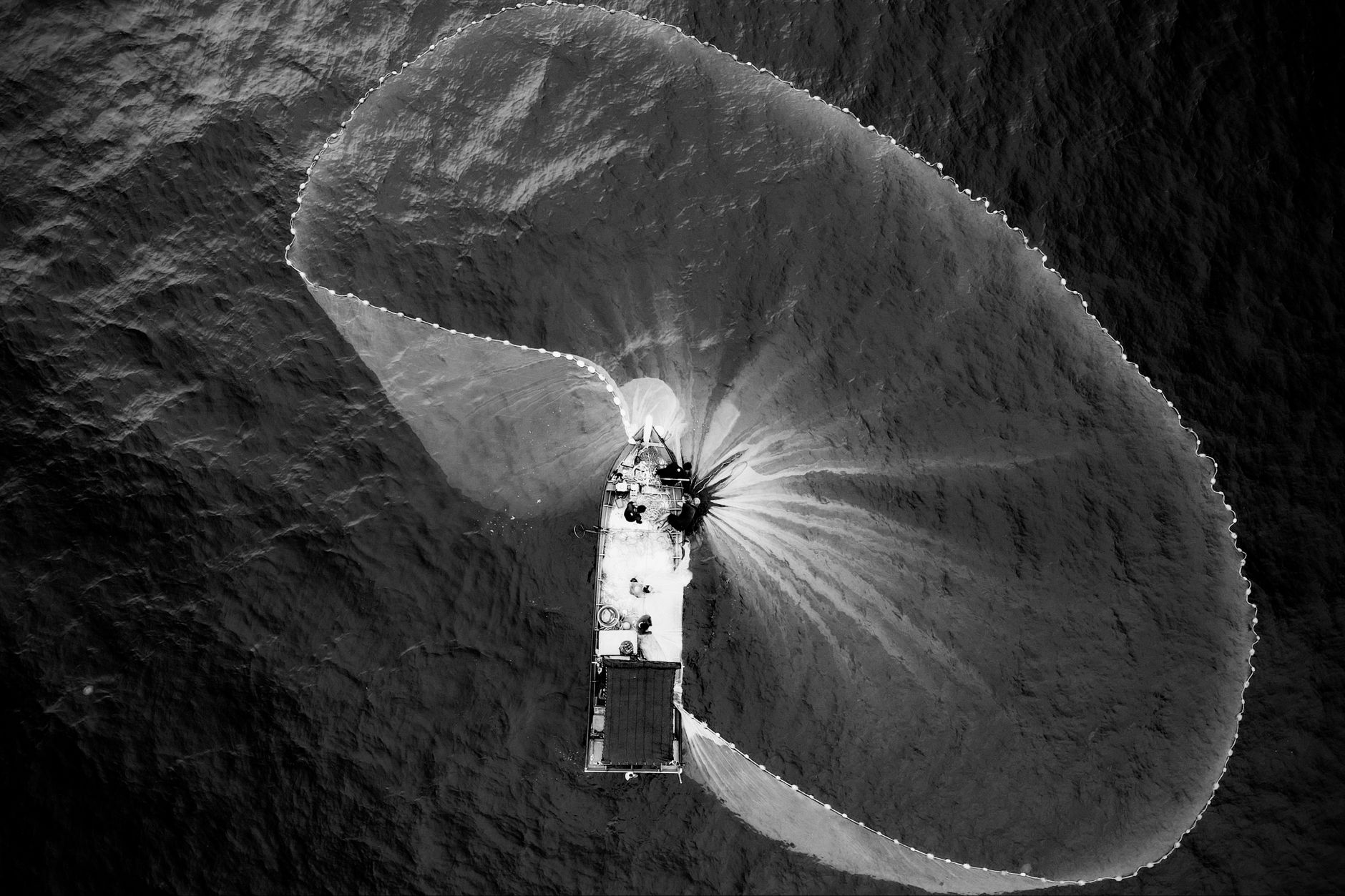
They row out into the dark water. The moon is high. The air is cold. And then—nothing.
They cast their nets. They pull. They wait. The boat rocks gently. The silence is loud.
This is the part that stings. We think faith is always bright. Always moving forward. But sometimes, faith looks like an empty net. Sometimes, it looks like sitting in a boat in the middle of the lake, wondering why you’re even there.
I’ll be honest. I’ve been in that boat. Not literally, obviously. But spiritually? Yeah. I’ve pulled up my net and found... well, not much. Maybe a few scraps. Not enough to feed anyone. Not enough to feel like God was really paying attention.
So, did Jesus show up?
Well. Yes. But not in the way we expected.
He didn’t come down into the water. He didn’t grab a rod and cast alongside them. He stayed on the shore. He waited.
And when the disciples saw Him, they didn’t rush over. They were still out there. Still in the middle of the lake. Still holding their empty nets.
But then He spoke.
“Have you caught anything?” ().
Simple question. Casual, even. But it cuts through the fog. It forces them to admit what they know deep down: No.
What Does the Net Symbolize?
The net is central to this story. It’s more than a tool. It’s a symbol.
Think about it. A net is designed to catch. To hold. To keep things contained. When you pull a net out of the water, you expect to see movement. Life. Silver scales flashing in the sunlight.
But in this story, the net is heavy. Heavy with water. Heavy with expectation. Heavy with the weight of a failed night.
When Jesus tells them to cast the net on the right side of the boat (), it’s not merely a tactical move. It’s an act of trust.
Why the right side? Who knows. Maybe it’s where the current is stronger. Maybe it’s just where He wanted it. The point isn’t the geography. The point is the obedience.
They didn’t ask, “Why?” They didn’t debate. They cast.
And the result?
“It was so many fish that they could not haul the net in” ().
Wait. Let me say that again. Could not haul it in.
That’s wild. Usually, when we pray for a miracle, we expect it to be manageable. A loaf of bread. A healed limb. Something we can handle.
But this? This is overflow. This is abundance so great it becomes a problem. They are strong men. Fishermen. They can handle a lot. But not this much.
The net represents God’s provision, yes. But also His excess. His generosity is not calculated. It isn’t measured to fit your needs exactly. It spills over. It defies your capacity.
It’s a bit awkward, honestly. Imagine trying to lift a net full of live, thrashing fish when you can’t even get it onto the boat. You’re straining. Your arms are burning. The fish are jumping. It’s chaotic.
And yet, it’s good chaos. It’s the kind of mess that comes from having too much.
How Does This Apply to Our Lives?
Okay. So how does a bunch of guys pulling a giant net onto a wooden boat apply to you and me?
We are all fishing. That’s the reality. We’re out in the water, trying to catch something. Security. Purpose. Love. Validation. Whatever it is, we’re casting our nets.
And some nights, the net comes up empty.
Some nights, it comes up with just a few small fish. Enough to survive, maybe. Not sufficient to thrive.
And then there are those rare nights when the net is so full you can’t lift it.
The application? Stop trusting your own timing.
The disciples fished all night. They relied on their experience. They understood the waters. They grasped the spots. They mastered the techniques. And they caught nothing.
Jesus, on the other hand, knew one thing: cast on the right side.
He didn’t give them a strategy. He gave them a direction.
In our lives, we often rely on our own timing. We think, “I’ll pray when I’re ready.” “I’ll serve when I have energy.” “I’ll forgive when I feel like it.”
But God’s timing isn’t ours. He’s on the shore, waiting for us to stop rowing in circles and cast where He says.
It’s scary, though. Because casting on the right side means letting go of the left. It means abandoning what we thought would work. It means trusting that the spot we avoided is the one with the fish.
Why Did Peter Want to Go Back to Fishing?
This is the emotional core, isn’t it? Why did Peter go back?
He had everything. He had walked on water with Jesus. He had confessed Christ as the Messiah. He had been told he would shepherd His sheep.
And yet, he went back to his nets.
Because the big picture is intimidating. Shepherding sheep sounds noble, but it’s hard work. It’s daily, routine, unglamorous.
Fishing, on the other hand, is familiar. It’s physical. It’s immediate. You cast, you pull, you see results. Or you don’t. But it’s yours.
Peter wanted to go back because he wanted control. With Jesus, everything was miraculous. Unpredictable. Glorious. With fishing, the rules were known. The outcome was uncertain, but the process was familiar.
We do this too. We retreat to what we know. We stop praying for breakthroughs and start praying for stability. We stop looking for signs and start looking for routines.
And that’s okay. It’s human. But the danger is forgetting that the One who called us is still on the shore. Waiting. Watching. Ready to speak when we’re ready to listen.
Peter’s return to fishing wasn’t a rejection of Jesus. It was a pause. A breath. A moment of processing.
And that’s where the miracle happens. Not in the grand gesture. Not in the dramatic rescue. But in the quiet, ordinary act of casting the net again.
One more time. Just once more. On the right side.
Your Action Step:
Today, pick one area of your life where you feel “stuck”—where you’ve been “fishing” without success. Write it down. Then, instead of analyzing it or worrying about it, do this:
Take five minutes. Sit quietly. Don’t pray a long prayer. Just acknowledge the emptiness. Say, “Lord, I haven’t caught anything lately. I’m tired. I’m frustrated.”
Then, do one small, specific thing that feels like “casting on the right side.” It could be sending a text to someone you’ve been avoiding. It could be paying a bill you’ve been putting off. It could be opening your Bible to a random page and reading one verse.
It doesn’t have to be big. It just has to be intentional. It has to be an act of trust, not just a reaction to anxiety.
Cast your net. See what happens. Even if it’s just a little fish, it’s still a catch. And that’s enough for today.