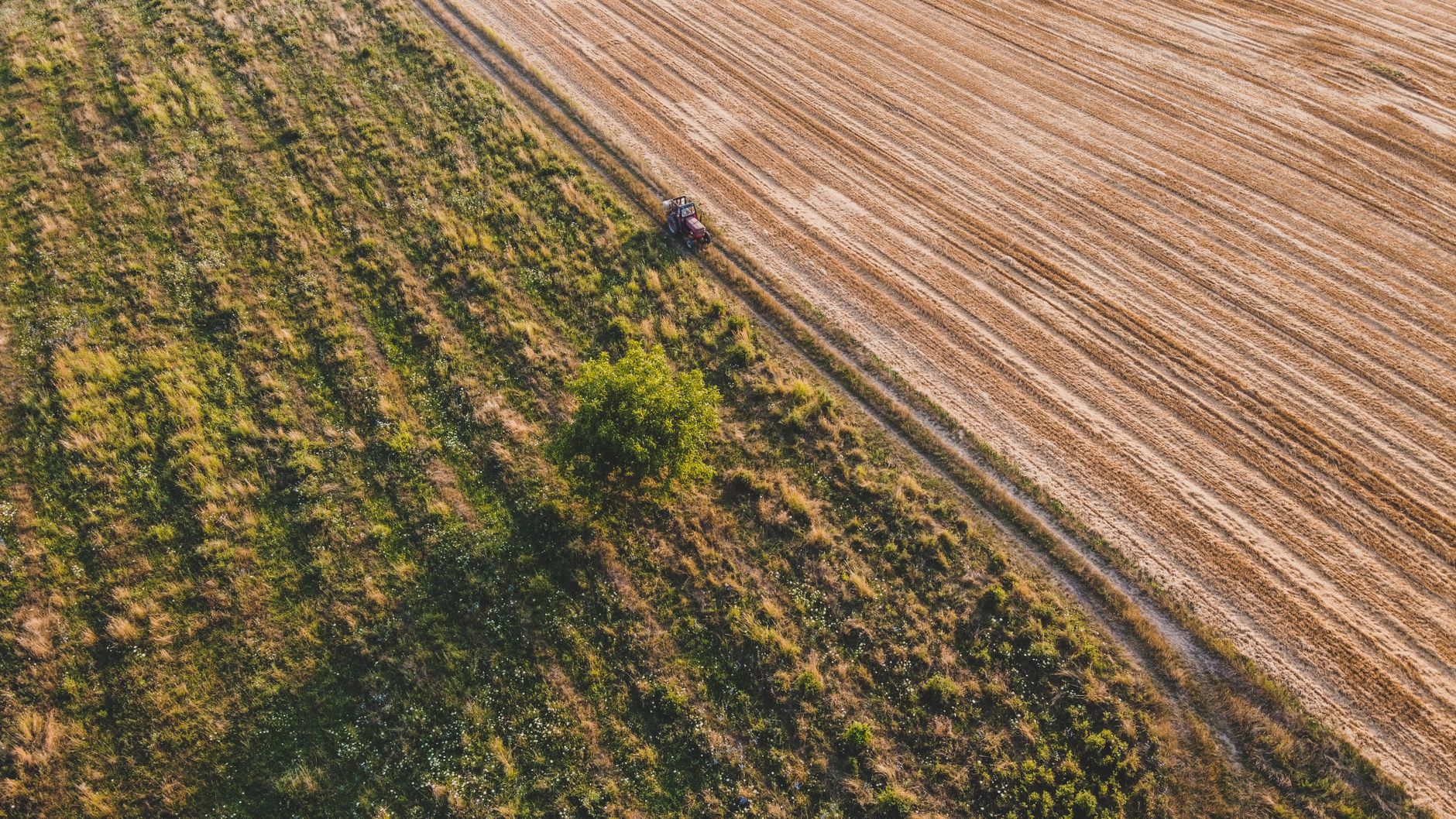
We usually think of Jesus as a teacher who makes things clear. He’s the one who untangles knots. But if you read the Parable of the Sower in Matthew 13, He does the opposite. He throws seeds at almost everything—good ground, bad ground, rocky soil, thorny dirt—and then He tells the disciples to listen with their ears.
It’s confusing. It feels inefficient. And honestly? It frustrates me a little, too.
I spent last Saturday in my kitchen, standing over a bowl of dried lentils. It was late autumn outside, the kind where the light dies by 4:30 PM and you’re left staring at a dark window, wondering if the year is slipping through your fingers. I was trying to start an indoor herb garden. A little project for the winter. A way to feel like I was creating something when everything else felt like it was decomposing.
I scooped the lentils into a pot. I mixed in some dirt. I watered them.
And then I left the pot on the counter, near the sink. Not in a sunny spot. Just... there.
By Tuesday, nothing was growing. By Friday, the soil looked dry and sad. I felt a familiar pang of failure. Not because the lentils were dead—lentils aren’t really plants in the way I was hoping—but because I had expected results from my effort. I had watered. I had planted. So why was there no fruit?
That’s when the parable hit me again. Not as a lesson on theology, but as a mirror for my own kitchen habits.
The Soil Isn’t What You Think It Is
In , Jesus tells the story of a sower who goes out to scatter seed. Some falls along the path and birds eat it. Some lands on rocky ground, springs up quickly, but withers when the sun comes out because it has no root. Some lands among thorns, and the thorns choke it. But some lands on good soil and produces a crop—a hundredfold, sixtyfold, thirtyfold.
We tend to read this as a story about the seed. The seed is Jesus’ word. It’s good. It’s powerful. If it doesn’t work, the problem is with us, the receivers. We’re the bad soil. We’re the rocky ground. We’re the thorns.
But here’s the thing I’ve been chewing on (literally, with my lentils): The sower scatters seed indiscriminately. He doesn’t do a soil test first. He doesn’t send a drone to scan for good ground. He just throws it out.
And then Jesus explains the meaning in verses 18-23:
“This is why I tell you these parables, so that people looking may not see, and those hearing may not understand. To them it is given to know the secrets of the kingdom of heaven, but to others it is not given. Whoever has will be given more, and they will have an abundance. Whoever does not have, even what they have will be taken from them.”
It’s a hard text. A lot of us skip over it because we don’t like the "taken from them" part. We want to believe that if we just try hard enough—water the right amount, prune at the right angle—the seed will grow. We want control.
But the parable says: You can’t force good soil to exist. You can only tend it.
I thought about my lentils. I was trying to force growth by adding things. Water. Dirt. Light. But I wasn’t listening to what the soil actually needed. In fact, I hadn’t even checked if the pot had drainage holes. (It didn’t.)
The "rocky ground" isn’t just spiritual hardness. Sometimes it’s the fact that I’m pouring water into a pot with no bottom, and wondering why my kitchen floor is wet. The "thorns" aren’t just sin. Sometimes they’re the clutter on my counter, the guilt from a missed prayer time, the distraction of scrolling through Instagram while I’m supposed to be meditating on Scripture.
The sower doesn’t choose the ground. But we are invited to be part of the process of clearing the thorns.
Cooking as a Practice of Surrender
Here’s where it gets weird for me. I love cooking. It’s my sanctuary. When the world is chaotic, chopping an onion feels like an anchor. But I’ve realized that my cooking can be a form of "rocky ground."
I like the result. I want it to look good on Instagram. I want it to taste perfect. But do I savor the process? Do I notice the smell of garlic hitting hot oil? Do I listen to the sizzle? Or am I just rushing toward the destination, treating the food as a commodity rather than a gift?
There’s a difference between making and receiving.
When I cook with the pressure to impress, my heart is rocky. Shallow roots. Quick excitement that fades when the meal is over and I’m scrubbing the pans. But when I cook with a quiet heart—when I pray over the ingredients, even if it’s just a simple soup—I find that the act itself becomes a form of worship. The seed isn’t just in the Bible; it’s in the daily rhythm of life.
I used to think that spiritual growth was about adding more "Christian" things to my week. More devotionals. Longer prayers. Bigger service hours. But the parable suggests that growth is about depth. It’s about letting the seed go down into the parts of you that are comfortable, familiar, and safe.
That’s terrifying, right? Because the "good soil" is usually where your pride lives. It’s where you’re most likely to choke the seed with thorns of self-reliance.
The Autumn of Our Lives
It’s autumn now. The leaves are falling off the trees in my neighborhood. It looks like death, but it’s not. The tree is shedding what it doesn’t need to survive the winter. It’s pulling energy back into its roots.
I think that’s what God is asking of us right now. Not more output. Not louder praise. But depth.
Maybe your "rocky ground" is a relationship that’s been superficial for years. Maybe your "thorns" are the busy-ness that keeps you from sitting in silence with God. The parable doesn’t promise that the seed will always grow. It promises that if it lands on good soil, it bears fruit.
And here’s the kicker: The sower doesn’t know where each seed lands. He just scatters them.
I think that’s the hardest part to swallow. We want God to be a gardener with precision tools. Shears. A laser-guided watering system. But Jesus is the Sower. He scatters. And He trusts us to be the soil that responds.
I’m still sitting with this. My lentils are dead, by the way. I pulled them out yesterday and composted them. But I bought real basil seeds this morning. Tiny, black little things. They look like they won’t do anything.
I’m not going to force them. I’m just going to put them in the pot, add water, and wait.
And while I wait, I’m going to pay attention. To the light coming through the window. To the quiet of the house. To the fact that I don’t know what will grow, but I know Who planted it.
What This Looks Like on a Tuesday
So here’s what this means for your ordinary week. Not some grand, sweeping spiritual overhaul. Just Tuesday.
Perhaps you’re in the kitchen, making breakfast for kids who are yelling about their shoes. Instead of gritting your teeth and rushing, pause. Just for a second. Acknowledge the chaos. Let that be your "rocky ground." Don’t let it harden you. Soften it with a breath. With a small, silent "I love you" to God in the middle of the mess.
Or maybe you’re at your desk, staring at an email that makes you want to scream. Your mind is full of thorns—doubt, anger, distraction. Before you type a word, close your eyes. Ask God to show you the one true thing you need to say. Not three things. One. Let the thorns be choked out by simplicity.
Perhaps you’re tired. Really tired. And you feel like your spiritual life is a withered plant in a sunny, dry spot. That’s okay. That’s the parable speaking to you. It says: Your roots need water. Not more sun. Water.
Go lie down. Read one verse of a Psalm. Don’t analyze it. Just let it soak in. Let it go deep, even if you don’t feel anything yet.
The Sower is still out there. He’s scattering seed everywhere—on your mistakes, on your successes, on your quiet Tuesdays and your loud Sundays. He isn’t keeping score of where it lands. He’s trusting the soil.
And you? You’re the soil.
You needn’t be perfect. You don’t even have to be "good" in the way we usually define it. You just have to be willing to let something take root. To let the thorns get cut back. To let the rocky surface break open, just a little, so that something new can breathe.
It’s not about producing a hundredfold right now. It’s about being open. Being available. Being willing to be changed in the quiet, unglamorous moments of your day.
So, water your soil today. And then sit back. Watch the window. Wait for what comes next.
It might be nothing. It might be everything. But the outcome isn’t up to you to force it.
It’s already been planted.