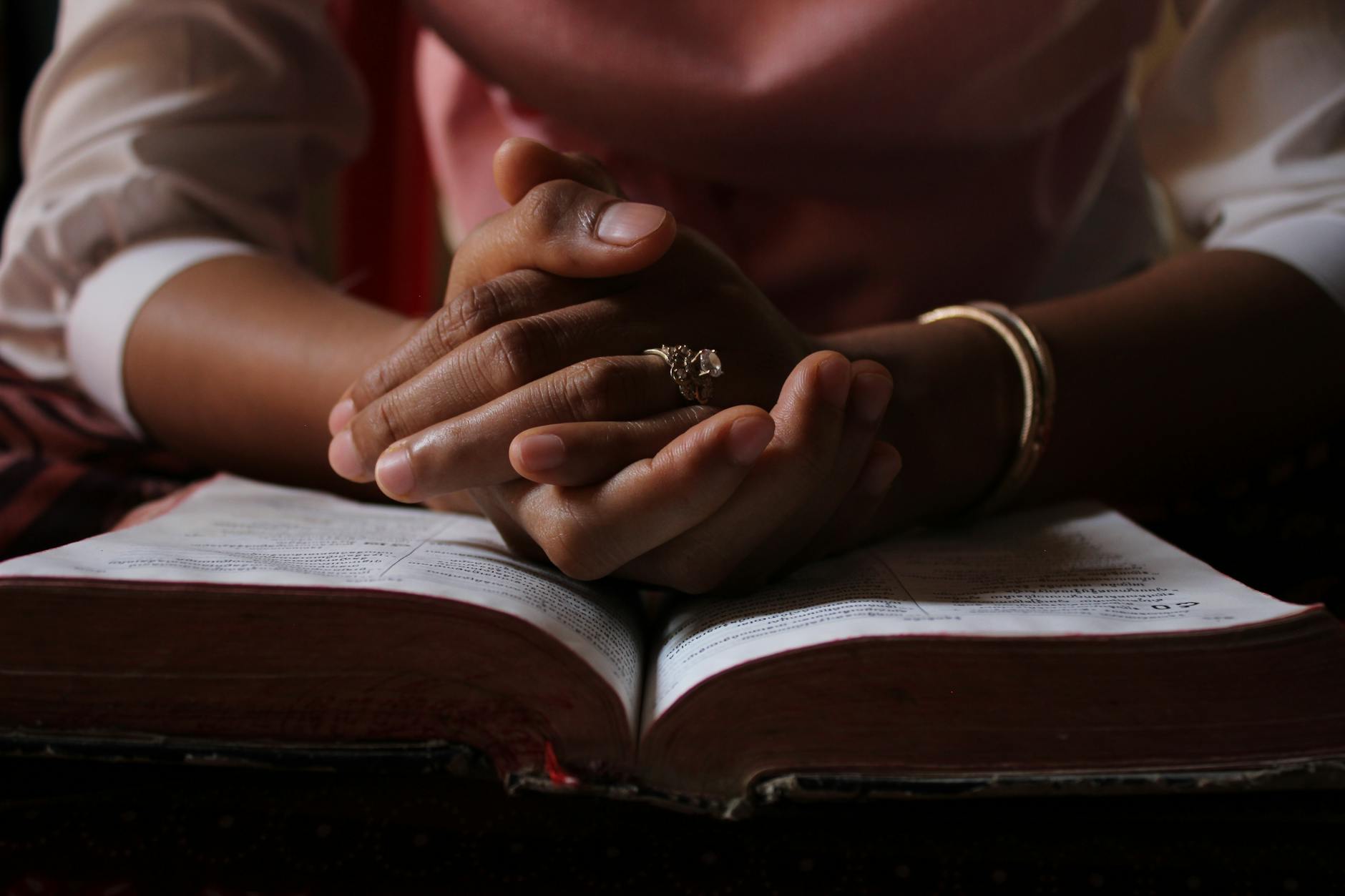
Christian Community Isn't a Sunday Event—It's a Tuesday Night Reality

You’re standing in a kitchen at 7:15 PM on a Tuesday. The sink is full. The dishwasher hums its rhythmic, annoying song. You’re staring at a half-eaten sandwich on a plate, wondering if you have the energy to scrape the crusts off your kid’s dinner before bed. It’s not a dramatic moment. There’s no choir. No sudden breakthrough. Just the quiet, heavy weight of routine.
This is where faith actually lives. Not on the stage. Not in the pew. Here.
We’ve been conditioned to think that "community" is a program. It’s a calendar invite. It’s the potluck after the service where you shake hands for thirty seconds and then scramble back to your minivan to avoid eye contact with the guy who always talks too much about his prostate health. We treat the Church like a weekly appointment, a spiritual gas station where we stop to refuel our souls so we can drive back into the wilderness of our lonely, autonomous lives until next Sunday.
But that’s not what Jesus built.
The weeks after Easter are supposed to be a celebration of victory. Death defeated. Sin crushed. The grave empty. It’s easy to get excited about the event of the Resurrection. But the real miracle isn’t just that Jesus got up; it’s what he did next. He didn’t ascend immediately. He didn’t just float up into the clouds and leave us with a "good luck." He spent forty days eating, talking, and breathing with his friends. He broke bread. He cooked fish over a fire. He let Thomas poke his side. He let Peter grill him about love.
The Resurrection wasn’t just a historical fact to be believed; it was a reality to be inhabited. And you can’t inhabit it alone.
The Upper Room Wasn’t a Cathedral
Look at Acts 2. The Holy Spirit falls at Pentecost, right? Fire, wind, tongues. It’s spectacular. It’s the birthday of the Church. But before the spectacle, there was the Upper Room.
And before that, there was the Last Supper.
Jesus didn’t pray his high priestly prayer in a vacuum. He was surrounded by twelve (well, eleven at the time) imperfect, flawed, bickering human beings. Judas was there. Peter was there, ready to deny him in five minutes flat. John was leaning back, probably trying to look important. They weren’t polished saints. They were a mess.
And Jesus loved them. To the end.
Here’s the thing most of us miss: God didn’t send the Spirit to make us independent spiritual superstars. He sent the Spirit to knit us together. The "Body of Christ" isn’t a metaphor for a building or an organization. It’s a biological reality. A hand doesn’t work if it’s severed from the arm. A foot doesn’t function if it’s on ice in the fridge.
I’ll be honest, I’ve struggled with this. For years, I treated my faith like a private subscription service. I paid my tithes, I read my Bible, I went to church. I was a good consumer of Christian content. But I was lonely. I was anxious. I was fighting battles in the dark that I had no one to call. I thought I was being "spiritual" by being self-sufficient. I wasn’t. I was just isolated.
It wasn’t until I forced myself to sit at a Tuesday night table with people I didn’t particularly like—the ones who chewed with their mouths open and talked too loudly—that I started to feel the weight of glory lifting.
The Scandal of Specificity
There is a specific kind of pain that comes with close community. When you are alone, you can curate your image. You can be the wise, calm, faithful believer. You can hide your mess. But when you live with someone, or meet them every week in a cramped living room, the mask slips.
You see their irritation. They see your pride. You realize they aren’t perfect, and you aren’t either.
This is the scandal of the Gospel. It’s not just "God loves you." It’s "God loves you, and he loves them, and you have to love each other."
In John 13, right before the arrest, Jesus does something bizarre. He takes off his outer clothing, wraps a towel around his waist, and washes the feet of his disciples. In first-century Judea, this was a slave’s job. It was dirty, humble, and intimate. Jesus, the Creator, became the servant.
Why? Because the ultimate proof of the Resurrection life isn’t a sermon. It’s servitude.
It’s the ability to look at someone annoying and say, "I will wash your feet." It’s the willingness to be known.
We live in a culture that worships autonomy. We want community on our terms. We want connection without vulnerability. We want to be loved for our potential, not seen for our reality. But the early church didn’t have that luxury. In , the believers "devoted themselves to the apostles’ teaching and to the fellowship, to the breaking of bread and to prayer."
Notice the order. Teaching and prayer were there, sure. But fellowship and breaking bread were central. They held everything in common. They sold property and goods to share with anyone who had need. They broke bread in their homes and ate together with glad and sincere hearts.
They didn’t just share theology. They shared life. They shared lunch. They shared money. They shared grief.
That’s what we’ve lost. We’ve traded the radical intimacy of the Upper Room for the comfortable anonymity of the Sunday crowd.
The Resurrection Changes How We Sit
If the tomb is empty, then death is not the end. And if death is not the end, then our loneliness is not permanent. But more than that, it means we are no longer bound by the fear of being exposed.
When you are waiting to die, you have to protect your image. You have to be someone. But when you are raised with Christ, you can afford to be nobody. You can afford to be real.
The power of the Resurrection is that it empowers us to forgive. It empowers us to serve. It empowers us to sit in the messy, awkward, beautiful silence of another person’s presence without needing to fix them.
Think about your own life. Who is the "Peter" in your life? The friend who is loud and impulsive? The colleague who is quiet and distant? The spouse who knows exactly which buttons to push?
Jesus didn’t die so you could be perfect. He died so you could be connected.
The "Weeks After Easter" aren’t just a liturgical calendar event. They are a call to step out of the tomb of your own self-sufficiency. The stone has been rolled away. The grave clothes are left behind. You are free to move. You are free to go. You are free to find your brothers and sisters.
But you have to go. You have to leave your car. You have to sit down. You have to listen.
I remember a specific Tuesday night about three years ago. I was going through a season of deep doubt. Not intellectual doubt, but emotional exhaustion. I felt like God had forgotten me. I dragged myself to a small group meeting in a basement that smelled like damp carpet and old coffee. I didn’t want to talk. I just wanted to leave.
One of the guys, Dave, noticed. He didn’t ask a probing theological question. He didn’t quote a verse. He just slid a plate of cookies toward me and said, "Rough week?"
And I broke. I cried. Not because of a sermon, but because someone saw me. And then they stayed.
That’s the evidence. That’s the proof. When the world looks at us, they shouldn’t see a bunch of people who know their Bible trivia. They should see a bunch of people who can sit in the dark with each other and not panic.
The Invitation
So, here is the challenge. Not a big, scary, "start a movement" challenge. A small, quiet one.
Who is the person you’ve been avoiding? Who is the one you judge for being too loud, too quiet, too messy, too perfect?
Maybe it’s time to send the text. Maybe it’s time to show up. Maybe it’s time to stop treating your faith like a museum you visit on Sundays and start treating it like a home you live in during the week.
The resurrection power isn’t just for getting you into heaven. It’s for getting you out of yourself. It’s for breaking the isolation that has held you captive since the fall.
Jesus is alive. And he is sending you. Not to the ends of the earth. Right here. Right now. To the table.
Who will you sit with tonight?