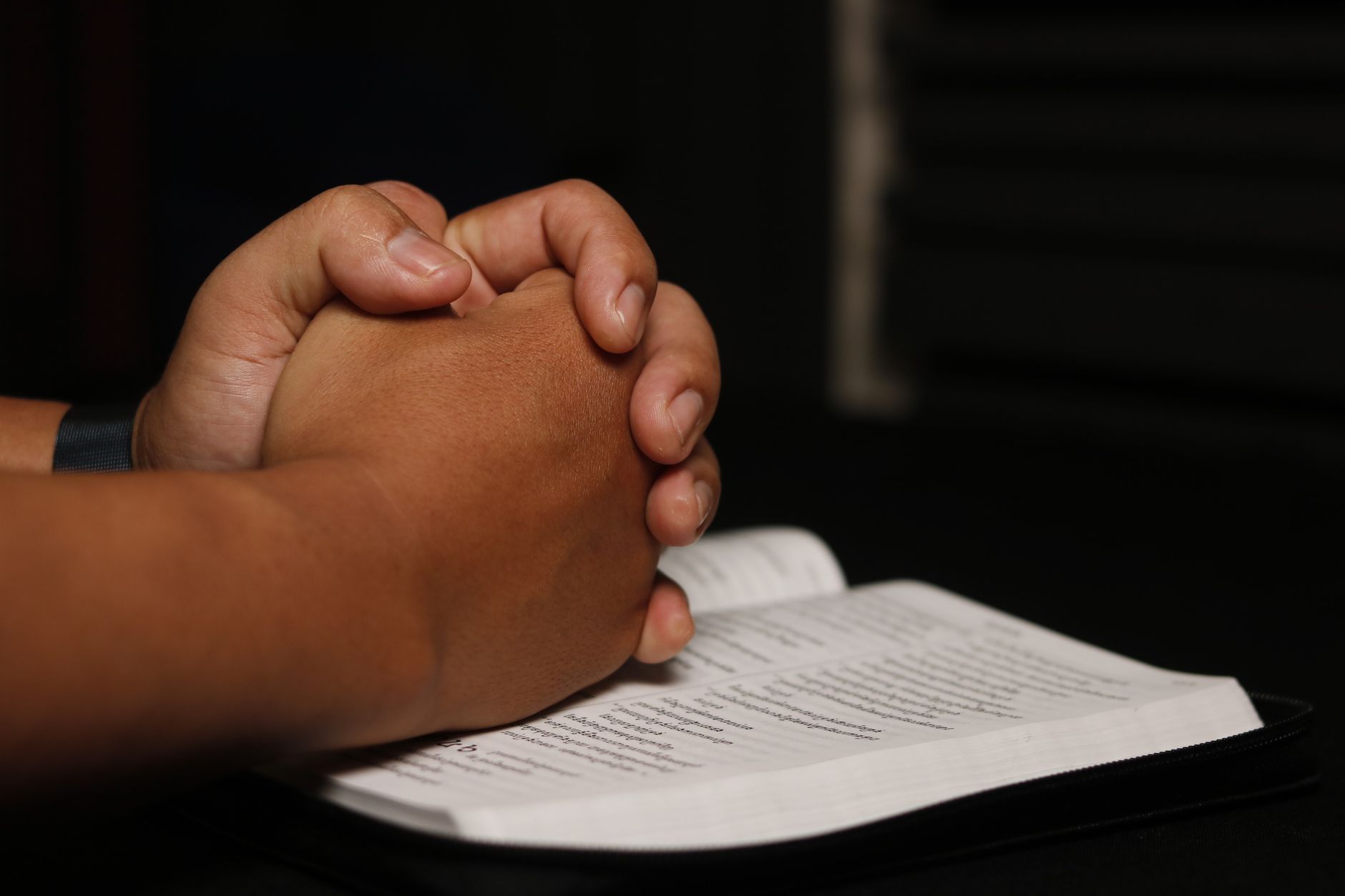
God’s Promises: Why He Doesn’t Rush His Timing

I remember sitting on the floor of my childhood living room, age seven, staring at the ceiling fan. It was August. The air conditioner was broken, the house was stifling, and my mom was late. Not just "traffic" late. Not just "five minutes" late. She was late in a way that made my stomach drop. I knew she wasn’t in an accident because she would have called. She just wasn’t here yet.
I felt a specific kind of panic. It wasn’t fear of death. It was the fear of abandonment. Did she forget me? Did she decide I wasn’t worth the drive back?
We’ve all been there. That tightness in the chest. That whisper that says, "You’ve been waiting so long, maybe He’s not coming."
It’s easy to assume that if God is faithful, He is fast. We treat divine reliability like a vending machine: drop in your prayer, shake the glass, get your blessing. If the snack doesn’t drop immediately, we assume the machine is broken. Or worse, we assume it’s empty.
But Scripture paints a different picture. A slower one. A deeper one.
God’s dependability isn’t measured in speed. It’s measured in consistency. Across centuries. Across generations. Across the gap between what He promised and what we see.
The God Who Remembers
Look at Abraham. You know the story. The man of faith. The one God called "friend." But read the details closely.
God promised Abraham a son in Genesis 12. Abraham was 75. Isaac was born when Abraham was 100.
That’s twenty-five years of waiting.
And let’s be honest, that’s a long time. In those days, life moved faster. You married young. You had kids young. You died young. Twenty-five years of barrenness wasn’t just a delay; it was a cultural shame. It was a biological impossibility. Sarah laughed at the promise. Abraham questioned it. They tried to help God out with Hagar. They tried to force the timeline.
But here’s the thing about Abraham’s God: He didn’t snap His fingers in year 26. He waited until the body was as good as dead.
"For the Lord your God is faithful. He will never fail you. He will never abandon you." — (NIV)
The Hebrew word for "faithful" here is emunah. It doesn’t just mean "truthful." It means stability. Steadfastness. Enduring strength. It implies a character that holds firm even when the ground shakes.
God wasn’t slow to forget Abraham. He was reliable to the covenant. The delay wasn’t a denial. It was the necessary space for the promise to become undeniable. If Isaac had been born at forty, it might have been biology. By one hundred, it was clearly God.
We live in a culture that worships speed. We want instant gratification. Instant healing. Instant breakthrough. We scroll through feeds of people who "made it" by thirty and feel like failures if we’re still waiting at thirty-five.
But God’s timeline is not our timeline. His dependability is often hidden in the waiting, not just revealed in the arrival.
It’s Not Just About You
This is where it gets tricky. We tend to personalize every delay. When we don’t get the job, we think, "God isn’t blessing my career." When we don’t get married, we think, "God isn’t fulfilling my purpose."
But divine dependability is often corporate. It’s generational. It’s bigger than your individual comfort.
Look at the Israelites in Egypt. God promised Abraham that his descendants would be a great nation. But He also said they would be strangers in a land not theirs, and they would be enslaved for four hundred years.
Four hundred years.
Did God forget them? Did He fail? No. He was preparing them. He was shaping them into a people who would know what it meant to cry out from the depths. He was building a community that would rely on Him for daily bread, for water from rocks, for protection from enemies.
If He had brought them out immediately, they would have been a loose collection of tribes, not a nation. The waiting forged them. The silence sanctified them. The delay delivered them.
"Remember the former things, those of long ago; I am God, and there is no other; I am God, and I will be known throughout the earth." — (NIV)
God uses the "long ago" to show us who He is. He uses the generations to show us His glory. Your pain isn’t only for you. Your waiting isn’t only for you. It’s part of a story that started before you were born and will continue after you’re gone.
I’ll be honest, I used to read the Psalms and feel guilty about my impatience. "Wait for the Lord," the text says. "Be strong and take heart." But what if I’m not strong? What if my heart is just tired?
It turns out, God doesn’t demand we manufacture strength. He promises to give it. The command to "wait" isn’t a passive sitting. It’s an active trusting. It’s like a soldier holding the line while reinforcements arrive. You don’t walk away. You don’t surrender. You hold on, knowing the General is moving.
The Evidence of His Character
How do we know He’s reliable when we can’t see it?
We look back.
We look at the cross. That’s the ultimate proof. God promised salvation. It took centuries. It required prophets. It involved a lineage. It demanded the incarnation. It necessitated the cross. It called for the resurrection.
It wasn’t fast. But it was reliable.
And it’s personal. You don’t have to earn it. You don’t have to wait for a cosmic sign. You just have to trust that the God who raised Jesus from the dead is the same God who cares about your Tuesday morning.
"But blessed are those who have not seen and yet have believed." — (NIV)
This verse isn’t only about Thomas. It’s about you. It’s about me. It’s about the person reading this in the dark, wondering if they’re alone.
Divine dependability is the anchor. Not the sail. The sail catches the wind and moves us forward, but the anchor holds us fast when the storm hits. And storms will hit. That’s the reality of life.
But here’s the good news: The anchor never drags.
I’ve noticed it in my own life. I’ve seen it in the lives of my parents. I’ve witnessed it in the lives of my grandparents. It’s a chain of dependability that stretches back to Abraham, to Isaac, to Jacob, to the twelve tribes, to the church, to us.
We are part of a family that has waited on God for two thousand years. And He has never, not once, failed to show up.
So, what do we do with this?
We stop looking at the clock. We stop comparing our waiting to someone else’s breakthrough. We stop assuming that silence equals absence.
We start looking at the evidence.
Write it down. Literally. Get a notebook. Every time you remember a time God showed up, write it down. "God provided the job." "God healed the knee." "God gave me peace in the hospital room."
When you’re in the thick of it, when the anxiety is tight and the air is stale, pull out that notebook. Read it. Remind yourself of the track record.
God’s dependability is not a theory. It’s a history. And you are part of that history.
The Wider Story
This isn’t just about your personal breakthrough. It’s about the kingdom.
When we wait reliably, we model trust to the next generation. We show our kids, our friends, our neighbors that God is reliable. We become living testimonies of His emunah.
Think about the early church. They were waiting for Jesus’ return. It had been forty years. Some were starting to get anxious. "He’s not coming back for another hour, is He?"
Peter wrote to them. He didn’t say, "Cheer up, it’ll be soon." He said, "The Lord is not slow in keeping his promise, as some understand slowness. Instead he is patient with you, not wanting anyone to perish, but everyone to come to repentance." ().
God’s delay is a mercy. It’s buying time for more people to be saved. It’s giving us time to grow. It’s giving us time to love.
So, when you’re waiting, you’re not only sitting there. You’re participating in God’s redemptive plan. You’re holding the line. You’re trusting the Long Game.
And one day, when the wait is over, when the tears are wiped away, and the promise is fully realized, we’ll look back and see that the waiting was never wasted. It was the very place where God met us.
It’s summer. The days are long. The light lingers. It’s a good time to breathe. To step out of the rush. To sit on the floor of your own living room, metaphorically, and just watch the fan spin.
Ask yourself: What has God been reliable to in my past?
Let that answer settle in your bones. Because if He was reliable then, He is reliable now. And He is reliable tomorrow.
That’s enough.