Jacob’s Limp: Why Spiritual Healing Means Change, Not Just Fixing
“So Jacob was left alone, and he wrestled with a man until daybreak. When the man saw that he could not overpower him, he touched the socket of Jacob’s hip so that it was wrenched as he wrestled with the man. Then the man said, ‘Let go, for it is daybreak.’” — (NIV)
I used to read the story of Jacob wrestling with God and feel a little cheated.
You know the kind of read. The one where you skim past the dust, the darkness, and the sheer physical exertion, looking for the shiny reward at the end. And sure, Jacob gets a new name. He gets a blessing. He walks away rich in favor. But he also walks away with a permanent limp.
In a culture that sells us healing as a restoration to full, athletic vigor—where the goal is always to run faster, jump higher, and never stumble again—a divine injury feels like a bug in the system. We expect the miracle to fix the brokenness. We expect the encounter to erase the scar.
But Jacob’s night on the bank of the Jabbok River suggests something different. It suggests that sometimes, the proof that God has truly touched you isn’t that you’re fixed. It’s that you’re changed.
It’s early summer now. The days are long and heavy with heat. The grass is thick, and the air smells like cut hay and impending rain. It’s the season of abundance, of things growing fast and wild. We’re out in the garden, pulling weeds, watching tomatoes ripen. We’re busy. And in this season of visible growth, it’s easy to forget that spiritual maturity often looks less like a sprint and more like a slow, painful limp.
The Night Jacob Was Alone
Genesis 32 sets the scene. Jacob is heading back to Canaan to meet his brother Esau. Remember Esau? The guy who ate his birthright for a bowl of stew and then spent twenty years plotting to kill him. Jacob is terrified. He’s sending gifts ahead, he’s dividing his camp, he’s praying like his life depends on it.
Then, he’s left alone.
The text says, “So Jacob was left alone.” ().
That phrase hits hard. It’s not just physical solitude. It’s the kind of aloneness that strips away your defenses. No more sending gifts to buy peace. No more clever tricks. No more deception. Just him and the Divine.
And then, the wrestling begins.
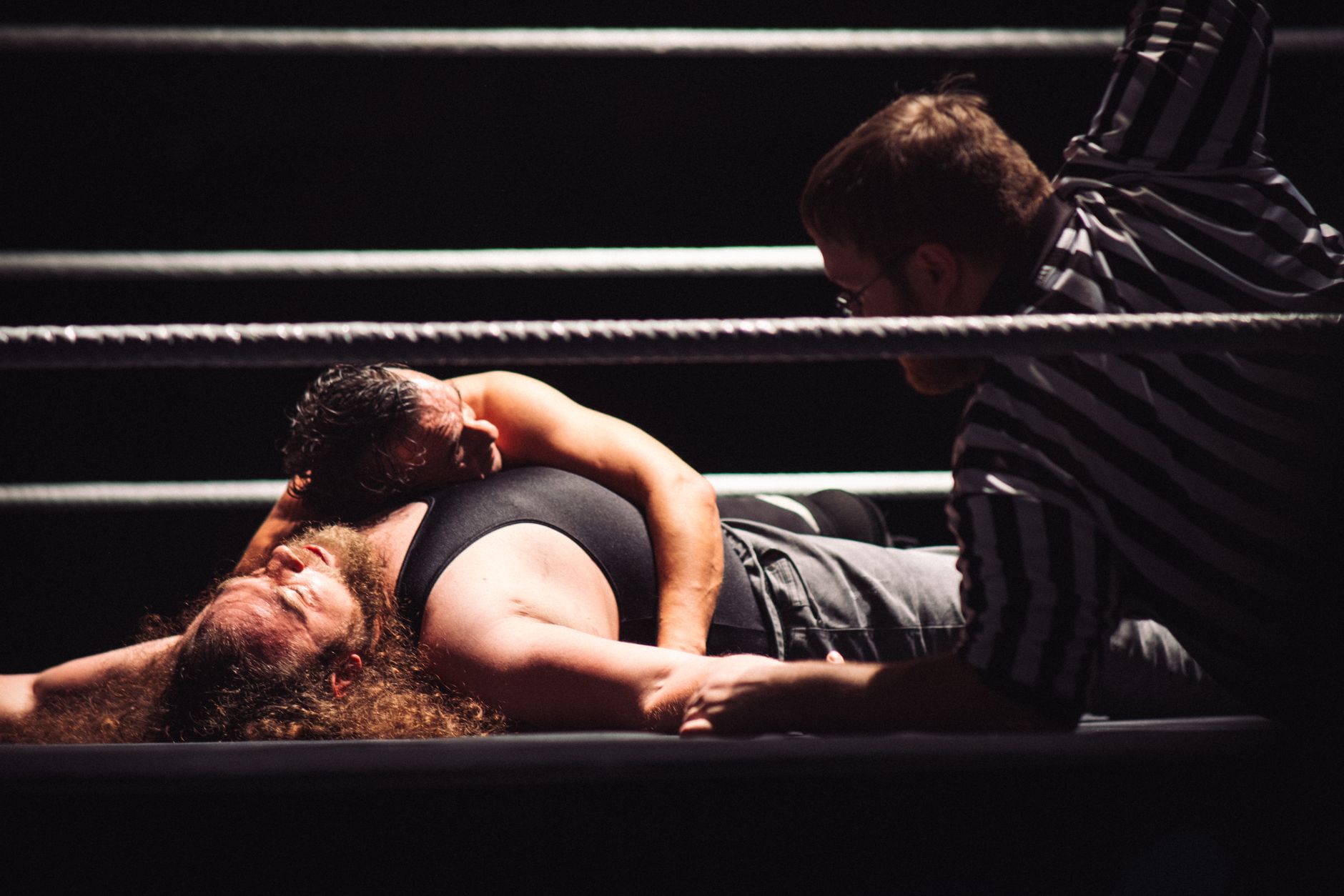
It’s not a gentle conversation. It’s not a vision of a burning bush where God speaks from the flame. This is physical. Gritty. Two entities locked in combat until the sun comes up. Jacob is gripping, pulling, twisting. He’s exhausted. His lungs are burning. And God? God is holding on.
Here’s the thing about wrestling that people miss: you can’t wrestle alone. You need resistance. If Jacob had been fighting empty air, he wouldn’t have gained anything. He needed an opponent. He needed God to push back.
I think about my own spiritual life. How often do I pray for God to make the path smooth? I want the road to be paved, the obstacles cleared, the enemy silenced. But what if the obstacle is the path? What if God isn’t removing the resistance so I can walk away, but is being the resistance so I can hold on?
Jacob’s limp wasn’t an accident. It was a receipt. It was physical evidence that he had wrestled with God and prevailed.
The Cost of a New Identity
When the "man" (often understood as a theophany, a manifestation of God) realizes he can’t overpower Jacob, he touches Jacob’s hip socket. The joint is wrenched. Jacob can’t walk right.
And then, the question comes: “What is your name?” ().
Why ask that? Why not just say, “I am God”?
It’s a diagnostic question. It’s asking, “Who are you, really?”
Jacob answers, “I am Jacob.”
Which means “deceiver” or “supplanter.” It’s his old name. It’s his identity built on grabbing the heel of his brother, on tricking his father, on surviving through cunning.
Then God says, “Your name will no longer be Jacob, but Israel, because you have struggled with God and with humans and have overcome.” ().
Israel. The one who struggles with God.
Notice the shift. Jacob wasn’t just fighting God; he was fighting with God. The victory wasn’t in defeating God. The victory was in holding on when everything in him wanted to let go.
I’ll be honest, I’ve struggled with this too. For years, I thought holiness meant consistency. I thought if I was truly walking with God, I’d be steady. Predictable. Unshakable. But Jacob teaches us that holiness is often messy. It’s a wrestling match. It’s messy hair, tired muscles, and a hip that aches when it rains.
The limp is the reminder. Without the limp, Jacob might have forgotten who touched him. He might have gone back to being just "Jacob," the clever survivor. The injury kept him humble. It kept him dependent. It was a constant, physical whisper in his bones: You didn’t do this on your own. You were held. You were changed.
Why We Hate the Limp
We live in a world that is obsessed with efficiency. We crave quick fixes. We want to read a book and be healed. We want to attend a service and be restored. We want to pray a prayer and have the pain vanish.
But spiritual healing is rarely instant. It’s often slow. It’s often painful. And sometimes, it leaves us with a limp.
Think about the last time you went through a real trial. Perhaps it was a loss. Perhaps it was a betrayal. Perhaps it was a long season of waiting that didn’t end when you thought it would. Did you come out the other side exactly as you went in? Probably not. You’re different. You move differently. You hesitate a bit more. You might even limp a little.
And we hate it. We look at our scars and think, God, did you forget to fix this?
But what if the limp is the gift?
What if the limp is what keeps you tethered to the ground? What if it’s what prevents you from floating away on the high of your own strength?
In the summer heat, when the sun is beating down and the work is hard, that limp slows you down. It forces you to pause. It forces you to look up. It reminds you that you are not in control.
I remember a friend who spent five years in a hospital bed with a chronic illness. She used to joke that her walking stick was her best friend. It wasn’t just a tool; it was a witness. Every time she leaned on it, she was acknowledging her weakness. And in that weakness, she found a depth of prayer she’d never known before. She wasn’t "fixed." She was founded.
Wrestling in the Daily Grind
So, how do we apply this? How do we wrestle when we’re not on a riverbank at 3:00 AM?
We wrestle in the mundane. We wrestle when we’re angry at God and don’t know how to say it. We wrestle when we’re trying to forgive someone who doesn’t deserve it. We wrestle when we’re tired of waiting for that breakthrough that isn’t coming.
The key is to stop running.
Jacob didn’t let go until the break of day. He held on. He gripped the hem of God’s garment, so to speak. He refused to be dismissed until he was blessed.
Try this: When you feel like God is distant, don’t just wait for Him to show up. Wrestle. Pray with your whole body. Cry out. Scream. Write it down. Argue. Jacob was physical. He didn’t just think about God; he engaged Him.
And when you’re done, when you’re exhausted and your hip is sore, don’t rush to get back to normal. Stay in the limp. Let it remind you. Let it be your testimony.
The world sees the limp as a disability. God sees it as a badge of honor. It’s the mark of someone who has met Him face to face.
The Blessing of the Broken
In the end, Jacob didn’t just get a new name. He got a new perspective.
He met Esau the next day. And guess what? Esau didn’t kill him. He ran to him, embraced him, and kissed him. The fear was gone. The deception was over. The blessing was secured.
But Jacob walked with a limp.
That’s the paradox. The struggle that left him weak also made him strong enough to reconcile. The injury that slowed him down also saved him.
We need to stop viewing our spiritual wounds as failures. We need to stop seeing our doubts as disqualifications. We need to stop thinking that if we’re limping, we’re losing.
Sometimes, the limp is the sign that you’ve won.
It’s the proof that you didn’t just listen to God. You fought with Him. You held on. You didn’t let go until you were changed.
And when the sun comes up—and it always does—you won’t just be standing there. You’ll be standing different. You’ll be walking different. And you’ll know, in your bones, that you are His.
“But he said, ‘My grace is sufficient for you, for my power is made perfect in weakness.’ Therefore I will all the more gladly boast with all my glory, for Christ’s sake. For when I am weak, then I am strong.” — (ESV)